Category: Leadership

  • ANNOUNCEMENT: The Revised and Updated Re-Release of Mad Church Disease (+ more!)

    Backstory: In 2005, because of the decisions she made to overwork herself and stay busy “doing” things for God and not “being” with Him, in combination with being in a toxic church environment, a girl named Anne found herself in the hospital for  a week, a battery of tests tried to determine why there was so much inflammation in her digestive system.

    It wasn’t just that. She gained forty pounds in the two years she was serving in the church full time. She was having panic attacks and acid reflux and was on a diet of espresso and sleeping pills just so she could wake up and go to sleep each and every day.

    After the hospital visit, she quit her job, got counseling, and set out on a mission to help anyone serving in ministry stay healthy – volunteers, staff, and friends of those who serve.

    That girl was me.

    Anne Jackson Anne Marie Miller Mad Church Disease
    This was the first time I saw my book Mad Church Disease in a store – Borders on West End in Nashville! It was a cool moment!

    In 2009, the book Mad Church Disease: Overcoming the Burnout Epidemic released through a traditional publisher.

    In February 2013, I found out from a  bookstore that when he tried to replenish his stock of Mad Church Disease, the order came back with the error: OUT OF PRINT. Because of whatever happens in the publishing world, they chose not to reprint it after there were none left which meant I never had a chance to buy any. Except for audio, eBook and used copies, they were literally all gone. And those are slowly disappearing too.

    This came with no warning from the publisher. After many emails and many hours studying the original contract, I learned this “Out of Print” scare was really a blessing in disguise. Why?

    Because now, I have all the rights to every format. Now, I can update it with so, so, so much I have learned from listening to others and in my own walk. I can make study guides for it and offer staff assessments and…well, the possibilities are endless!

    (Plus I get to put my sweet new name on it: Anne Marie Miller.)

    mad-church-revisedSince I am wrapping up writing Book #3, I will spend this summer re-writing, revising, updating, scheming, praying over and for this new book.

    I won’t lie – when I first heard from the bookstore manager that it was out of print, I was angry. Not because of anything monetary, but because several times a week I hear from someone that says this book truly helped them.

    This message is NOT one that can be pulled from the shelves and I vowed to fight tooth-and-nail to make that happen.

    I didn’t happen in the way I imagined it, but it happend in the way it was meant to be.

    In the fall, after my new website launches, the next “big thing” will be the re-release of Mad Church Disease (and its many helpful counterparts).

    For instance…

    • The updated book (eBook or print)
    • An updated study guide
    • A staff or team assessment tool for leaders
    • Coaching options
    • Web classes
    • Private consultations
    • Church workshops
    • Retreats

    With the launch of the new website and all that is and has changed, I want to be sure to keep in touch with those who want to hear about what this new release has to offer. It would mean the world to me if you’d let me have your email address (I won’t do anything with it other than to keep in touch).

    With that, for everyone who is subscribed before the re-launch of Mad Church Disease, I promise you not only will you be the first to know, you’ll be the first to have a chance to get it – and a few other things – for free. That won’t be a public offering.

    You can sign up below! (*if you have a pop-up or ad block extension, it may not work. if that’s the case, click here and it will go to the form).

    Any questions? I’m all ears.

    Subscribe to get updates & get my free eBook “Interlude” today!


  • 7 Ways to Be Kind Online

    Wow, oh wow: How much the Interwebz have changed since I removed myself from them a couple of years ago. The big mediums are still around: blogging, Facebook, Twitter (with some additional ones like Pinterest I just can’t seem to want to embrace). But how people interact has changed, and that has caused me to first, adapt; and second, take a good look at my own manners online.

    I consider myself a newbie again, and in the process, I’ve been surprised at how people I’ve interacted with before – online or offline – don’t always have the best manners online. I try to show grace. I know people are busy. I know how we use social media is different, but good manners never go out of style.

    Here’s a few rules I try to live by because of how I’ve seen them break (and broken them myself):

    1. Keep it friendly. You have every right to your opinion, even if it’s an opposing view. There’s a difference between expressing it and bringing others down by being intentionally defensive/confrontational/unapologetic.
    2. Follow through. I’ve had people say “oh, when you post this thing or that thing, I can’t wait to link to it/retweet it/show my world your stuff!” And then they fall off the face of the earth.
    3. Answer directly. If someone asks you a question, asks to meet up with you, asks if they can send you their book/album/latest blog post, just give them a direct answer. “Yes, I’d love for you to” or “no, I’m sorry. I just don’t have margin right now to give it a good look.” It takes courage to say no. Man (or woman) it up.
    4. Be quick to apologize. I recently discovered I had a few Direct Messages on Twitter that got buried in spam. I saw them when they came in, but they moved way, way down the list. Be honest. Apologize. Make it right when things fall through the cracks.
    5. Ask for help. If you truly can’t manage your social media while having good manners, ask for help. Sometimes, I enlist the help of a friend or two to reply to people who just need basic information and nothing specific from me. If I know I can’t reply to email quickly because of travel or deadlines, I turn on an out-of-office response.
    6. Acknowledge people. Sometimes when someone contacts you, it doesn’t need a reply, or a simple “thank you” will do. Even if you don’t have time to give them what they need, acknowledge that they’ve reached out to you in some way and point them to someone or a resource that can help them. (If you’re too busy to do this, see Tip #5.)
    7. Give yourself – and others – grace. The truth is we will all have things that fall through the cracks. Text messages, emails, Tweets…Realize for every time you’ve had someone not reply to you, you’ve likely not replied to someone. If it’s important, check in with them again and give them some grace. It’s true…what goes around, comes around.

    What about you? Anything to add?

  • Is There Joy in Holding on to Grief?


    Screen Shot 2013-05-15 at 10.02.03 AM
    On July 3, 2012, eight days before my friend Jay Williams turned 32 years old, he was buried in Lebanon Cemetery in Plains, Georgia. The air was still and thick with southern humidity, and sweat collected in the small of my back under the layers of my black dress. My friends and I stood on the brittle grass of the cemetery, waiting in line to say goodbye to Jay one last time. We dodged the sun by shuffling in and out of each other’s shadows and swatted at clouds of gnats with paper fans provided by the local funeral home.


    In the summer of 2010, Jay, myself, and 15 other people rode our bicycles from San Diego to Myrtle Beach, raising money and awareness for an organization that empowers people to fight the HIV/AIDS and water crises in Africa. Jay was the first cyclist to arrive at the church that would send us off. As I pulled into the church parking lot in San Diego, I saw a short, skinny guy with a tan wearing a straw cowboy hat riding his red bicycle in circles. Was he one of the team cyclists? Or some vagabond traveler who perhaps illegally acquired a nice road bike? Was he drunk? He looked so happy—too happy.

    DSCN1269Quickly, we learned he was one of our teammates. While the rest of us worried if our gear would hold up or how we’d survive cycling nine hours a day in 110-degree weather, Jay was content to cycle the 3000 miles we traveled cross-country in Teva sandals, occasionally strapping a milk jug of water to the back of his bike so he wouldn’t have to stop. Even without clipping into pedals or using recovery drinks (he preferred chocolate milk), Jay was the strongest on our team. He wasn’t competitive, though; he’d stop and help someone change out a blown tube or, in his South Georgia accent, would cheer up a teammate having an unpleasant day.

    As we got to know Jay, we learned he was in a skiing accident when he was a teenager. After extensive surgery that caused his abdominal muscles to be separated and required him to lose a kidney, he was back on the slopes the next winter. Considering the doctors told him he’d be lucky to walk again, this was only one small miracle in Jay’s life. Jay was brave. Jay was humble. It seemed like Jay was invincible. He quickly and quietly became everybody’s unlikely hero.

    After the tour ended, each cyclist returned to his or her respective hometown. Jay made an effort to stay in touch with each of us, scattered as we were.

    1photoAfter tornadoes ripped through the south in spring 2011, I volunteered at a benefit concert in Birmingham, Alabama. Jay drove four hours from Plains, Georgia, to help me sell T-shirts for two hours. Then he drove four hours back so he could be at his job on time the next morning. This wasn’t atypical. This was Jay. By day, he worked in his father’s peanut factory and by night, secretly repaired friends’ houses when they were on vacation. He loved Jesus, and to everyone who knew him, he never had to say a word to prove it. His actions proved this love beyond any shadow of doubt.

    On June 29, 2012, when the team received the news that Jay fell two stories and was fighting for his life, none of us could believe it. Twenty-four hours later, Jay passed away due to the trauma caused by his fall.

    Sadly, Jay was not the first of my friends to pass last year. Two others have unexpectedly died: one in a tragic hiking accident in Japan and another after an arduous battle with cancer. I began to wonder if, as a 33-year-old, death simply becomes a more frequent notification or if last year has been an anomaly. Thinking on these things, my chest tightens and my breathing becomes shallow and quick. I’m faced with the reality of my own transience now; death has been speaking into my consciousness more repeatedly than usual.

    Most of the cycling team was able to make it to Georgia for Jay’s funeral. We stayed in two guest homes on a farm in the tiny town of Ellaville. None of us knew the family who owned the farm before we arrived. They heard we were coming, and they opened their doors. They loved Jay, and they loved Jesus, and because of this, they loved us.photo

    Alone in one of the houses while waiting for our ride to the visitation, I sat in the living room with the book I was reading. After attempting to understand the same sentence four times, I gave up and stared off into the smoke-stained fireplace in front of me, listening to the sounds that filled the house: water dripping from the kitchen faucet, songs of crickets and the rustle of leaves as squirrels jumped around in the heavy woods. In my hasty packing, I forgot to bring a pen. I searched the cottage and found a pencil and scribbled in the back of my book:

    When someone in our periphery dies, it gives our spirits pause. A moment of silence. But when someone close—a kindred spirit—passes, our reality becomes surreality. We float through a new and different kind of time and space, and our bodies feel the loss of a bright soul that no longer walks with us. The air, the sounds, the light … all is different when someone departs. When they became part of us, they implanted a small piece of their spirit in our own. And when they leave, there is such pain from the empty space that spirit used to fill. This is grief.

    During the days of Jay’s visitation and funeral, grief was loud. It was in the eyes of the 200 people who lined up in the heat to say goodbye to him and console his parents and his girlfriend. It spoke into the quiet moments in conversations as we spoke of Jay’s memory. It was in the tears of his friends as they touched his casket before it was lowered.

    However, as loud as grief was, joy was louder. It seems incredibly trite to write those words; it feels as cliché as saying, “He’s in a better place now” or “God just wanted one of his angels home.” But joy outsang grief, and its notes ring just as beautifully today as they did last year. Joy sings of a life lived bravely and with love. Joy sings of friendships created and renewed. Joy sings of every minute someone spent with Jay. In the moments where grief is raw and bleeding, joy reaches in with peace and hope. It is not intrusive or overpowering. It is constant and gently comforts our sorrow. In the space this mercy offered us, we could mourn and celebrate.

    July 12, 2012 marks the day Jay was buried. New concerns and mundane tasks seem to lessen the time I think of his death. Distractions threaten to numb the sensitivity to life and community and love I experienced so intensely almost a year ago. It’s effortless to let death, grief, and the overwhelming joy it paradoxically brings move away from our hearts. Our culture demands we must get over it—life goes on—but with intentional determination, maybe we have an alternative choice.

    Yes, we must accept life and death, just as we must accept grief and joy. There is a season for all things. But instead of moving on from the things death awakens in us, perhaps we embrace them. Perhaps we choose to keep the mark a life leaves on our heart unhealed and open and, by doing so, we create space for others to experience the legacy of love and joy a departed friend leaves behind.

    Can there, in fact, be joy in holding on to grief?


  • Are You Afraid of the Blank Page?

    Back in the fall, I had the opportunity to speak at The Youth Cartel’s Summit on the process of creativity. I laughed. A lot. Because my process looks a lot more like…it looks nothing like a process at all (so much that I’ve struggled for five minutes to find any kind of analogy).

    After explaining my lack-of-process, they didn’t budge, so instead, I changed my talk. Kind of. Yes, there is a creative process behind every project we do but it varies from person to person. In my research, I discovered the “Blank Page” we often fear really isn’t blank. And I also managed to give a history lesson on Easter Islandall within about 15 minutes.

    The Youth Cartel made this talk available last week, so I thought I’d share it with you! If you have 15 minutes and are a part of creating anything, I hope it can give you some insight on why the process you go through before you enter the creative process is more important than the creative process itself. I hope you enjoy it!

  • Are Forgiveness and Reconciliation the Same?

    I never thought there was much difference between reconciliation and forgiveness. In my heart, it all kind of meant the same thing – letting go of pain that someone had inflicted on me. Usually this involved some type of “making up” process involving apologies, sometimes tears, and a hug to make everything alright.

    Twelve years ago, somebody hurt me in a very painful, inexcusable way. For years, I didn’t allow myself to work through the pain as I needed to. A couple of years ago, circumstances (which were mostly out of my control) caused me to stare at this wound square in the face.

    As strange as it sounds, I’ve never doubted that I forgave this person. I feel fortunate that, for the most part, forgiveness comes easy to me. There are probably only two situations in my life where I know I still need to work on forgiving someone, but this particular hurt isn’t one of them.

    However, as I was processing through healing during this time, I began questioning if i really had forgiven this person. Sure, the scabs had been peeled off and the wounds were fresh – and it hurt…badly, all over again.

    Someone who was helping me through this sent me an email. He encouraged me and said that what I was experiencing wasn’t me being bitter or holding on (which was what I was afraid I was doing) but that I was desiring reconciliation.

    I wanted for this person to own up to the mistake and for everything – painful as it would be – to be okay again.

    And I wanted for the relationship to be harmonized and restored completely.

    Later, I read this in a book:

    Joseph was reconciled with his brothers when they came to Egypt in search of grain. By the time his brothers reached Egypt, he was able to stand before them and confront them because he had no inner feelings that would keep him from having a relationship of unity and peace with them.

    Forgiveness is unilateral. You can forgive even if [someone] never admits [their wrong doing], is never sorry, and never changes. But reconciliation requires both people’s commitment to recovery, honesty, repentance, forgiveness, and communication. Even then, reconciliation is a long and difficult process of breaking down barriers and building trust.

    You may not ever be reconciled with a person that hurt you (or that you hurt).

    That part takes both people to work through.

    Forgiveness is a necessary, but not a sufficient condition for reconciliation.

    However, forgiveness is a decision that you make, and continue to make, regardless of the other person’s choice.

    And through the cross and grace and love, you can.

  • Time? What Time? That’s HILARIOUS! Hahahaha.

    In case you’re new around these parts, I wrote a book called Mad Church Disease that came out last year. It’s about how I literally burned out while working at a church because I didn’t know how to manage my time or my stress.

    I ended up in the hospital for a week as my body just…inflamed…itself. I was having panic attacks, was unable to treat my depression adequately, had withdrawn from relationships and at the center of it, left no time for spiritual connection or growth.

    It has been five years since that burnout, and slowly and clumsily I’ve been trying to be a better steward of my time and resources. I fail often, but when I do, it’s with gusto.

    Many people place their priorities in a hierarchical manner. Like:

    1. God/Faith
    2. Spouse/Partner
    3. Children
    4. Extended Family
    5. Career
    6. Leisure/Friends

    Remember last week when we talked about how time in developed countries is linear? This is a prime example of how we try to work in items onto our timeline based on priority.

    Let’s be real with each other for a moment.

    Life is crazy and more often than not, if we look at this list of priorities they often fall out of line.

    Career comes first for many of us, even if it’s not our intent. We combine things as well, like family and leisure (think weekend baseball games, recitals, etc.) or faith and career (say, if you work in a church).

    These things get all jumbled up. Because we can’t make sense of them anymore, it’s difficult to put them in our linear timelines. We get stressed out, frazzled, and rushed, and just throw things where they randomly fit.

    Instead of viewing these parts of our life in a hierarchy, what if we viewed them cyclically?

    Let’s compare this to a bicycle.

    Most of us would agree that faith is the most important part of our lives, so imagine that as the middle – the axle. If our spiritual life stays healthy and strong, the other things – the spokes – are able to function in harmony and move us forward.

    When you ride a bike, you don’t check off each rotation of the wheel like a to-do list. You simply arrive at your destination.

    If the axle on my bike is damaged in some way, the spokes don’t carry the weight properly, which causes the tire to bend, which will then send me flying over the handlebars. Or the frame may come loose off the axle. Either way…

    Crash.

    Sometimes a spoke gets messed up. Sometimes things in our lives don’t go as planned. But when that happens, you don’t crash. You can ride cautiously until you get it fixed. Or you can even walk your bike to where you’re going. It’s not ideal.

    But it’s not a crash.

    While this post doesn’t come directly out of the book we’ve been studying the last week (In Praise of Slowness), I think in order to get to the root of our stress and feeling rushed we need to take a look at how we spend our time.

    How do you view time and priorities? Linearly or cyclically? Are you moving forward, or do you feel stuck? Is everything rotating around what’s most important in your life or are you wondering where all the time went?

  • Speed Praying

    Tomorrow we’ll begin to discuss some more of In Praise of Slowness‘s content, but I am so grateful Carl has taken part in these conversations. Below are some more thoughts from Carl (he left them in the comment section in yesterday’s post) on the church’s responsibility of taking on this movement of slow. I’ll offer some thoughts after his notes.

    From Carl:

    I think the church can spearhead the move to slow down. And by ‘church” I mean both ministers and congregations. After all, every religion has slowness at its core.

    The idea of a Sabbath, of setting aside time to rest, reflect and reconnect with the self, with others and with God, is common across all faiths. It’s spelled out in black in white in the Bible: “Be still, and know that I am God” (Psalm 46:10).

    The problem is that the church has been infected by the same virus of hurry that has accelerated the rest of our culture.

    Last year, I gave a talk in the chambers beneath St. Peter’s church in Vienna, Austria. It was the first time the crypt had been used for a secular event in nearly a thousand years. With the dim lighting, ancient altarpieces and faint whiff of incense, and with the stone walls blocking out all mobile phone reception, it was the perfect setting for an evening devoted to Slow. My hosts were a group of high-flying businesspeople but the monsignor in charge of the church was there, too. I felt a bit uneasy seeing him in the front row, but in the end he laughed along at my more risqué jokes. Afterwards, he came up to me with a confession. “You know, as I was listening to you, I suddenly realized how easy it is to do things in the wrong way,” he said.

    “Lately I have been praying too fast.”

    I live in England (my father-in-law is a retired vicar) and see the same problem in the church here: ministers forced to serve multiple parishes, dashing between congregations, grappling with red tape, spread so thinly that they struggle to minister properly and hover permanently on the edge of burnout. These days, we already have Speed Yoga and Drive-Thru Art Exhibitions. Maybe Speed Praying will be next.

    There is a serious point here.

    How can someone stuck in roadrunner mode preach the wisdom of slowness? The answer is they can’t.

    It’s like Wall Street bankers singing the praises of salary restraint. Or Tiger Woods promoting monogamy. It doesn’t wash.

    As Gandhi said, you must be the change you wish to see in the world.

    The church is uniquely equipped to make the case for slowness.

    But it must put its own house in order first.

    It has to practice what it preaches…

    —–

    Anne’s Thoughts:

    I know religion often screams at us to hurry because “souls are dying” and “ministry is 24/7” and “we have to keep up!” I get it. I lived in that world for a long time. One of the examples Carl uses in his book is the classic race between the tortoise and the hare. I think we all know the outcome of that.

    Yesterday, I also watched Carl’s TED talk, which someone had recommended. He talks about several European countries who have intentionally embraced the idea of appropriate slowness in the workplace. Not only are they healthier and more well-rounded people, the quality of their work exceeds the quality of work in nations who spend up to twice as many hours working a week.

    The bottom line with taking on a slower, more intentional pace in faith, I believe, is this:

    Who are we relying on?

    Are we relying on the power within ourselves to accomplish the work in the world that we believe needs to happen? Or are we relying on our faith, and the power of community to do it?

  • A Personal Note to You from Carl Honoré, The Author of “In Praise of Slowness”

    Carl Honoré
    Carl Honoré

    Hi Anne,

    Thanks for providing such a thoughtful arena for the ideas in In Praise of Slowness. This feels like the beginning of an urgent and beautiful conversation.

    I’d like to inject a note of optimism. In this roadrunner world, it can sometimes feel like there is no option but to follow the hurrying herd. But there is.

    Everywhere you look nowadays, more and more people are waking up to the folly of living in fast-forward and discovering that by slowing down judiciously they do everything better and enjoy everything more; they live happier, healthier and richer lives; they are grow more connected to themselves and to others.

    When I first began researching In Praise of Slowness, the search term “slow movement” turned up nothing on Google. There was Slow Food and Citta Slow but that was about it. Today you get a half million entries on Google under “slow movement” in English.

    I know these are big words, but I think we are on the cusp of a cultural revolution. Slow is not some shallow fashion trend, here today, gone tomorrow. We are lurching towards an historical turning point, a moment when the tectonic plates are beginning to shift below the surface.

    For at least 150 years everything has been getting faster – and for the most part speed was probably doing us more good than harm in that time. But in recent years we’ve entered the phase of diminishing returns – today speed is doing us more harm than good. This turbo-charged culture is taking a toll on our health, diet and work, our communities, relationships and the environment.

    The case for slowing down is so powerful today that it’s no longer just yoga teachers, aromatherapists and church ministers making it; it’s business too. The corporate world is starting to realize that too much speed and hurry hurts the bottom line; it erodes productivity, hampers creativity and leads to more mistakes. And look what happened recently to the global financial system. Things got so rushed in the markets that no one had the time or the incentive to lift up the hood and ask if the engine was overheating, to pull apart those collaterized debt obligations and credit default swaps to work out whether they were worth the paper they were written on. The whole system was based on fast growth, fast consumption and fast profits – and look how it nearly tipped us into a total economic meltdown.

    There is still a very long way to go to win over the corporate world to the virtues of slowness, but there are encouraging signs. A senior manager at IBM has even launched a “slow email” movement, urging people to unplug and make the most of email (and life) by using email less. And that’s IBM, not a meditation school. The need for slowness is being discussed everywhere from the boardroom to the bedroom.

    Let me finish by reiterating what Anne said in her post: the Slow philosophy is NOT about doing everything at a snail’s pace. It’s about seeking to do everything at the right speed. Sometimes slow, sometimes fast, and sometimes not doing anything at all. Savoring the hours and minutes rather than just counting them. Doing everything as well as possible, instead of as fast as possible. Building deep and meaningful connections with people, the spirit, culture and the land. It’s about quality over quantity.

    Perhaps Mae West put it best when she said: “Anything worth doing is worth doing slowly.”

    Lookiong forward to seeing where this conversation leads us….

    Carl Honoré dropped by the blog last night and shared a few words with us. Thanks, Carl, for taking the time to engage into our little discussion!

    I love that he reiterates a very positive, very doable point of view as most of us have expressed some sort of anxiety of “there’s-no-way-I-can-slow-down-my-life-is-a-mad-house!”

    I know I have several steps we are taking to be intentional about slowing down, some we even began this week. But I live life spending a minimum of 100 days on the road. How do you not hurry or grab a bite to eat in-between flights or avoid the microwaved eggs at hotels when you’re traveling?

    What I do think is interesting is both in the book and in his comment, he mentions that “slow” is often a pace set for church ministers. Since most people reading this blog are involved in some type of leadership role or staff position at a church, I can see how we are actually just now moving into the “fast” mode, and the statistics prove it. A higher percent of ministers are generally more overweight than the national average. Close to 2000 ministers leave their posts every month. The average length of stay at a church position is 18 months. More and more ministers are coping with escapism to deal with the stress. A large number (72-78% depending on where you get your stats from) don’t believe they have a close friend.

    I personally ended up in the hospital almost five years ago because I had no idea how to manage my schedule or my stress. The cult of speed caught up with me in a significant way.

    This is an epidemic within our stained-glass walls as well.

    Those of us who have spent time inside the church or within religious circles know how damaging the pace has been increasing. He mentions how the Slow Movement has been gaining ground over recent years, so what if we helped lead this movement within our own circle of influence?

    I’d love to hear your thoughts.

  • How To Respond to Emergencies (Without Getting in the Way!)

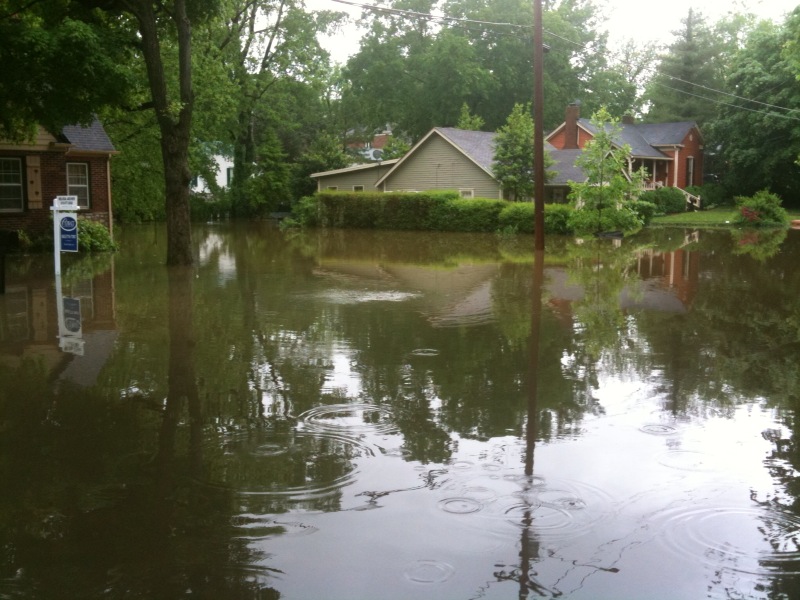
    As most of you know, Nashville and the surrounding areas were hit over the weekend with anywhere from eight to sixteen inches of rain. We had around fifteen inches in our backyard. Two of the main rivers that surround Nashville, the Cumberland and the Harpeth, went well beyond flood stages. Highways are closed, hundreds of roads and houses remain feet under water, and thousands of people have been impacted by this unexpected weather event.

    Flooding in Franklin TN

    There are many ways one can respond to crisis, and depending on the circumstance, sometimes what works best in one situation doesn’t work the best in another. I’ll share a bit from what I’ve learned from Red Cross disaster and aid training, and I’d love for you to share anything you’ve learned about helping out in the comment section.

    LOCAL DISASTERS:
    If a local disaster occurs (weather, fire, etc.) typically the first day is the day when city officials and emergency management organizations are assessing the issues. LET THEM. Trained professionals like the National Guard, local police, fire, and EMS and military are performing any rescues that need to happen.

    When this emergency response is happening effectively (proper communication is happening between officials and the media and public), it’s best to do whatever the officials tell you to do. You may want to jump in your car and dig through the rubble of a neighborhood that was hit by a tornado, but without the trained emergency responders there giving direction, you may cause more harm than good. Do you know if the gas lines have been turned off or if the buildings are stable enough to enter?

    Of course there will always be moments when we need to run into a situation even if a procedure hasn’t been set up, but these should be the exceptions. Bottom line? When good emergency management and communication is occurring, it’s best to follow their instructions.

    In the case of a local emergency, how can you help?

    (*Before attempting anything, always look at the situation and assess if it’s safe for you to enter!)

    Neighborhood:

    • Visit neighbors, especially elderly or sick, to see if they are safe or need anything.
    • Offer your home for the displaced in your community
    • Host a gathering with food for people nearby where it’s not a danger for people to venture out
    • Bring water or snacks to emergency responders and thank them
    • Watch for official statements, and communicate them to neighbors who may not have access to TV or the internet

    Community:

    • Follow instructions from emergency management on travel safety and how to volunteer. In the case of the Nashville flooding, if people volunteer outside of the official “Hands on Nashville” initiative, it will actually hurt Nashville, as assistance from FEMA is given through Hands on Nashville.
    • As long as emergency operations are running smoothly, don’t go rogue. Again, so many times in press conferences I kept hearing about how legitimate water rescuers had to rescue Good Samaritans who don’t know how to do water rescues, and the people who really needed help had to wait longer.
    • Follow official instructions. (Did I say that already?) There are reasons for this.
    • Call the local Red Cross or whatever organization is set up as the official responder. They will be able to guide you to volunteer in the most effective way because they are the ones who know not only the needs, but the priorities of the needs.
    • Find out what supplies you personally can donate in the long run to help (clothes, food, etc.).
    • Organize events in your community or church to collect supplies or donations.

    I highly encourage anyone who feels the pull to help when emergencies arise to sign up at your local Red Cross for disaster relief training, as well as first aid and CPR. These classes take time and cost a little money, but they will have you ready to assist when disaster strikes. Find a group of people at your office or your church to take classes with you. I promise you the skills you will learn will be invaluable.