Category: Current Events

  • Does The Reputation Management System Need to Die?

    A couple of weeks ago, I was spending some time with a highly respected friend of mine. For contextual purposes, this person is someone who has sold a lot of books, has a very well-read blog, and travels all over the world to speak and consult. One of the things he talks about frequently is social media, and I consider him to be a true trailblazer in regard to such things.

    During our conversation, he told me that he doesn’t keep Twitter searches going anymore for his name or his books. He deleted all of his Google Alerts. For the good or for the bad, he recognized how these things affected him.

    I was shocked. Over the last few years, I knew him to be one of the few “famous” people who would still go and leave a comment on someone’s blog after they wrote something (again, good or bad) about him. He’d clear something up or apologize if he needed to, or thank them for their kind words.

    He doesn’t do that anymore.

    Granted, none of us – myself completely included – are probably at a level of success where my friend is (if you define “success” by how much product is sold or brand recognition one receives.) If he didn’t thank people on their blogs, his book sales wouldn’t go down and the percentage of his platform that would leave if they were upset for any reason would be so small you probably couldn’t measure it.

    But, this conversation got me thinking…

    And for the last few weeks, I’ve rolled his actions around in my head and have wondered, “Do I need to do the same?”

    Does the reputation management system need to die?

    Don’t get me wrong. I LOVE a personal touch. When someone shares a review of my book or even has a concern about it (as in he or she is offended by its “adult” themes – cough, cough…) I do my best to leave a comment on their blog or thank them on Twitter. Why? Because I appreciate them taking the time to share, even if we disagree on if the word “crap” is foul language.

    For companies, I think it’s wise to monitor such things. I’ve had amazing experiences with Zappos, American Airlines, MediaTemple, and FedEx to name a few (and not so great experiences with Hotel Indigo and USAir, I’ll add). Those touches absolutely make a difference in my brand loyalty.

    Here’s the catch for looking at this in my context as an individual and looking at them in their context as companies.

    I am not a brand.

    They are.

    Some would disagree. There are things about the way I communicate that are uniquely my voice or characteristic of me.

    But I will say it again.

    I am not a brand.

    I am not a commodity.

    I have to ask myself, “Is my identity is wrapped up in what others are saying about me?” … and “Is the only way I’m responding like this is because it helps me build my own recognition or reputation?”

    If the answer to either of those questions are yes, then for me, my reputation management system needs to die.

    I am (slowly) learning that what others think of me, or what I say, what I write, or what I do is not important at all.

    The one question I need to know the answer to is, “Am I doing ________ with integrity?”

    And if the answer to that question is yes, that’s the only thing with which I need to concern myself.

    Is this a poor PR strategy? Bad marketing? Missing out on opportunities?

    Probably.

    But then I remind myself…

    I am not (and nobody is) a product.

    I am not (and nobody is) so important that we need to know what is said about us personally and react to it.

    And most importantly, I don’t think any of this “reputation management” is as important as simply being who we are and doing it as honorably as we can.

  • A Season for Everything, Just Do It Faster…

    I love how Chapter 1 in In Praise of Slowness begins.

    “What’s the very first thing you do when you wake up in the morning?”

    The answer: We look at the clock.

    For me, it just so happens that my clock is also my alarm is also my phone is also my email checker is also my Twitter checker is also my blog checker and my Google Reader and…

    Before I even get out of bed, I’m caught up on what’s happened in my little world in the last six to eight hours.

    That’s right.

    MY little world.

    One could argue I am simply checking in on connections and relationships.

    But honestly, I’m just trying to find my first fix of affirmation for the day.

    (FIRST fix. AHEM. More on that in a moment.)

    In some philosophies, we learn from Honoré that time is considered cyclical. It’s renewing. Coming…going…it’s about seasons. Before there were things like clocks or time was measured as intricately as it is today, people ate when they were hungry and slept when they were tired.

    In most of our developed countries, time is considered linear. There is a Point A (now) and a Point B (end) and we want to accomplish as much as possible between the two. We take chunks of activities (eating, sleeping, TV, work, community, sex, reading, shopping, consuming, etc.) and try and fit as many chunks as we can into these pre-determined amount of time.

    So we feel rushed. We feel there’s never enough time to do everything.

    (Hey, that’s because there *isn’t* enough time to do everything).

    With improvements in technology over past centuries, we’ve been able to save time. It is going to take me two months to cycle across the country this summer. In a plane, I could knock that out in six hours.

    If we let technology run the show, we don’t save time — we just end up with a different set of things to do. The amount of work hardly changes, if it changes at all.

    This chapter, titled Do Everything Faster, ends with a very poignant quote from Mark Kingwell, a professor of philosophy at the University of Toronto.

    “Despite what people think, the discussion about speed is never really about the current state of technology. It goes much deeper than that, it goes back to the human desire for transcendence.”

    And that takes me back to my early morning affirmation/phone/clock check.

    I know one day I’m going to die.

    I’d like to hope that what I’m doing is making a difference.

    Even though I’m not on this earth to make people happy, my morning “routine” is an (inaccurate) way I measure my value.

    Sometimes things need to be done fast. When I was on a bike ride with a friend last week, a severe thunderstorm was approaching us. We needed to stop smelling the honeysuckle on the Natchez Trace and find shelter. When we need to travel quickly to reach family members in a crisis, we can. Some cancers can’t be treated slowly. You get my point.

    However, instead of viewing time as a line with a start and a finish, I’m going to try and see my life and purpose in seasons. Some fast. Some slow. Some stressed. Some refreshing. Some aggressive. Some passive. Some giving. Some receiving.

    By intentionally doing this, there is no Point A in my linear time line of life and purpose that begins each morning.

    Instead, every morning is a step into a season.

    …A season lived in truth to whatever I happen to be doing at the time.

    …A season to be embraced and experienced fully.

    Not rushed. Not hurried. And not afraid of the end.

    (Because there is no end…just a season for leaving this physical life behind…)

  • Speed Praying

    Tomorrow we’ll begin to discuss some more of In Praise of Slowness‘s content, but I am so grateful Carl has taken part in these conversations. Below are some more thoughts from Carl (he left them in the comment section in yesterday’s post) on the church’s responsibility of taking on this movement of slow. I’ll offer some thoughts after his notes.

    From Carl:

    I think the church can spearhead the move to slow down. And by ‘church” I mean both ministers and congregations. After all, every religion has slowness at its core.

    The idea of a Sabbath, of setting aside time to rest, reflect and reconnect with the self, with others and with God, is common across all faiths. It’s spelled out in black in white in the Bible: “Be still, and know that I am God” (Psalm 46:10).

    The problem is that the church has been infected by the same virus of hurry that has accelerated the rest of our culture.

    Last year, I gave a talk in the chambers beneath St. Peter’s church in Vienna, Austria. It was the first time the crypt had been used for a secular event in nearly a thousand years. With the dim lighting, ancient altarpieces and faint whiff of incense, and with the stone walls blocking out all mobile phone reception, it was the perfect setting for an evening devoted to Slow. My hosts were a group of high-flying businesspeople but the monsignor in charge of the church was there, too. I felt a bit uneasy seeing him in the front row, but in the end he laughed along at my more risqué jokes. Afterwards, he came up to me with a confession. “You know, as I was listening to you, I suddenly realized how easy it is to do things in the wrong way,” he said.

    “Lately I have been praying too fast.”

    I live in England (my father-in-law is a retired vicar) and see the same problem in the church here: ministers forced to serve multiple parishes, dashing between congregations, grappling with red tape, spread so thinly that they struggle to minister properly and hover permanently on the edge of burnout. These days, we already have Speed Yoga and Drive-Thru Art Exhibitions. Maybe Speed Praying will be next.

    There is a serious point here.

    How can someone stuck in roadrunner mode preach the wisdom of slowness? The answer is they can’t.

    It’s like Wall Street bankers singing the praises of salary restraint. Or Tiger Woods promoting monogamy. It doesn’t wash.

    As Gandhi said, you must be the change you wish to see in the world.

    The church is uniquely equipped to make the case for slowness.

    But it must put its own house in order first.

    It has to practice what it preaches…

    —–

    Anne’s Thoughts:

    I know religion often screams at us to hurry because “souls are dying” and “ministry is 24/7” and “we have to keep up!” I get it. I lived in that world for a long time. One of the examples Carl uses in his book is the classic race between the tortoise and the hare. I think we all know the outcome of that.

    Yesterday, I also watched Carl’s TED talk, which someone had recommended. He talks about several European countries who have intentionally embraced the idea of appropriate slowness in the workplace. Not only are they healthier and more well-rounded people, the quality of their work exceeds the quality of work in nations who spend up to twice as many hours working a week.

    The bottom line with taking on a slower, more intentional pace in faith, I believe, is this:

    Who are we relying on?

    Are we relying on the power within ourselves to accomplish the work in the world that we believe needs to happen? Or are we relying on our faith, and the power of community to do it?

  • A Personal Note to You from Carl Honoré, The Author of “In Praise of Slowness”

    Carl Honoré
    Carl Honoré

    Hi Anne,

    Thanks for providing such a thoughtful arena for the ideas in In Praise of Slowness. This feels like the beginning of an urgent and beautiful conversation.

    I’d like to inject a note of optimism. In this roadrunner world, it can sometimes feel like there is no option but to follow the hurrying herd. But there is.

    Everywhere you look nowadays, more and more people are waking up to the folly of living in fast-forward and discovering that by slowing down judiciously they do everything better and enjoy everything more; they live happier, healthier and richer lives; they are grow more connected to themselves and to others.

    When I first began researching In Praise of Slowness, the search term “slow movement” turned up nothing on Google. There was Slow Food and Citta Slow but that was about it. Today you get a half million entries on Google under “slow movement” in English.

    I know these are big words, but I think we are on the cusp of a cultural revolution. Slow is not some shallow fashion trend, here today, gone tomorrow. We are lurching towards an historical turning point, a moment when the tectonic plates are beginning to shift below the surface.

    For at least 150 years everything has been getting faster – and for the most part speed was probably doing us more good than harm in that time. But in recent years we’ve entered the phase of diminishing returns – today speed is doing us more harm than good. This turbo-charged culture is taking a toll on our health, diet and work, our communities, relationships and the environment.

    The case for slowing down is so powerful today that it’s no longer just yoga teachers, aromatherapists and church ministers making it; it’s business too. The corporate world is starting to realize that too much speed and hurry hurts the bottom line; it erodes productivity, hampers creativity and leads to more mistakes. And look what happened recently to the global financial system. Things got so rushed in the markets that no one had the time or the incentive to lift up the hood and ask if the engine was overheating, to pull apart those collaterized debt obligations and credit default swaps to work out whether they were worth the paper they were written on. The whole system was based on fast growth, fast consumption and fast profits – and look how it nearly tipped us into a total economic meltdown.

    There is still a very long way to go to win over the corporate world to the virtues of slowness, but there are encouraging signs. A senior manager at IBM has even launched a “slow email” movement, urging people to unplug and make the most of email (and life) by using email less. And that’s IBM, not a meditation school. The need for slowness is being discussed everywhere from the boardroom to the bedroom.

    Let me finish by reiterating what Anne said in her post: the Slow philosophy is NOT about doing everything at a snail’s pace. It’s about seeking to do everything at the right speed. Sometimes slow, sometimes fast, and sometimes not doing anything at all. Savoring the hours and minutes rather than just counting them. Doing everything as well as possible, instead of as fast as possible. Building deep and meaningful connections with people, the spirit, culture and the land. It’s about quality over quantity.

    Perhaps Mae West put it best when she said: “Anything worth doing is worth doing slowly.”

    Lookiong forward to seeing where this conversation leads us….

    Carl Honoré dropped by the blog last night and shared a few words with us. Thanks, Carl, for taking the time to engage into our little discussion!

    I love that he reiterates a very positive, very doable point of view as most of us have expressed some sort of anxiety of “there’s-no-way-I-can-slow-down-my-life-is-a-mad-house!”

    I know I have several steps we are taking to be intentional about slowing down, some we even began this week. But I live life spending a minimum of 100 days on the road. How do you not hurry or grab a bite to eat in-between flights or avoid the microwaved eggs at hotels when you’re traveling?

    What I do think is interesting is both in the book and in his comment, he mentions that “slow” is often a pace set for church ministers. Since most people reading this blog are involved in some type of leadership role or staff position at a church, I can see how we are actually just now moving into the “fast” mode, and the statistics prove it. A higher percent of ministers are generally more overweight than the national average. Close to 2000 ministers leave their posts every month. The average length of stay at a church position is 18 months. More and more ministers are coping with escapism to deal with the stress. A large number (72-78% depending on where you get your stats from) don’t believe they have a close friend.

    I personally ended up in the hospital almost five years ago because I had no idea how to manage my schedule or my stress. The cult of speed caught up with me in a significant way.

    This is an epidemic within our stained-glass walls as well.

    Those of us who have spent time inside the church or within religious circles know how damaging the pace has been increasing. He mentions how the Slow Movement has been gaining ground over recent years, so what if we helped lead this movement within our own circle of influence?

    I’d love to hear your thoughts.

  • In Praise of Slowness #1: The Idol of Hurry

    There it sat on the bookshelves in my office/dining room/music studio. In Praise of Slowness by Carl Honoré.

    Place aside for me to read.

    Someday.

    Maybe when I wasn’t so busy.

    As I was packing my bags for a quick trip to California last week, I asked him what I should read.

    He handed me In Praise of Slowness.

    And so the journey began.

    I know at least forty of you ordered Carl’s book. If you didn’t, don’t worry. I’ll try to use the book as much as possible in this blog series so anyone can follow along. If you want to order it now and jump in on future posts, here’s the link.

    Honoré begins the book with his own personal experience of a life ruled by hurry and busyness. He’s a successful journalist running a million miles an hour and sees the article that actually inspired this book — a piece called “The One Minute Bedtime Story.” As a father of a toddler, he fully understands the idea to speed up bed-time so he can move on to his evening routine of more and more rush. As he hovers over the purchase button, wondering how quickly Amazon can ship him the book he’s struck with a thought:

    “Have I gone completely insane?”

    He continues,

    “My whole life has turned into an exercise of hurry, in packing more and more into every hour. I am Scrooge with a stopwatch, obsessed with saving every last scrap of time, a minute here, a few seconds there…”

    And he wonders why all of the world around us seems to be in such a rush; in the same “cult of speed” (a term I love).

    He asks if it’s possible or even desirable to take time to slow down.

    He’s clear about his message early on: he is not proposing a war against speed.

    Instead, it’s taking a step back and looking at our love of speed – an addiction? An obsession?

    An idol?

    (Cue punch in the stomach…now).

    Has hurry become an idol?

    (Yes, please keep chewing on that morsel…tough, isn’t it?)


    Honoré describes physical side effects of hurry and burnout (hey, wait, I wrote a book on some of this stuff too…) like  insomnia, weight gain, headaches, poor diet, and lack of exercise.

    He makes an interesting observation that the world’s fastest nations are also the fattest nations.

    Other symptoms of this “busy idolatry” impact us socially.

    We don’t look forward to things anymore.

    We enjoy things too quickly, and the moment that we should be savoring is dismissed.

    The word boredom hardly existed 150 years ago but now it’s one of our most common fears.

    I know I’m afraid to be bored.

    Afraid of what the silence brings.

    Afraid I’m being lazy.

    Or unproductive.

    And therefore…worthless.

    Something I’ve used hurry to medicate is my fear of becoming vulnerable in real community. If I’m busy, it leaves me no time to connect beyond a superficial level.

    I’m afraid to really let people in, and so my calendar owns me, and it’s an easy way to cop out of  relationships and make excuses.

    Because really…who’s going to argue with a calendar?

    Honoré quotes Milan Kundera,

    “When things happen too fast, nobody can be certain about anything, about anything at all, not even about himself.”

    (Insecurity much?)

    If we’re insecure of ourselves, we can’t be who we truly are with others.

    And so we, who are created for others, and others for us, slowly pass away into a time warp of busyness and hurry.

    And we wonder why we’re lonely. And we think we’re completely stuck.

    We think there’s no way out because life has to be this way.

    And this is just the introduction to the book…!

    Over the next few blog posts in this series, we’ll cover a few chapters at once, but this introduction was so rich, I felt it deserved a post of its own.

    So, what say you? If you’ve read the book, what’s connected with you? If you’re following along on the blogs, does any of this ring true with you?

  • If You Feel Like You Need to Slow Down…

    I stayed out too late last night with dear friends.

    Not a hurried feeling in the world; honest conversation and dreaming over appetizers and dessert. They live in California. I live in Nashville. I cherish every moment I can spend with them.

    This morning, however, was a different scenario. California traffic lived up to its inconvenient name. Google Maps said my drive to the airport, with traffic, would be 35 minutes. So as anyone who has ever driven in California would do, I allotted an hour.

    I was still about ten miles out (and crawling along the 55) when my safe “hour before departure” time passed. I looked in front of me. Nothing but brake lights. I looked to my left. The HOV lane was empty. The fine if I got caught? $340. The cost of me not being home on time? Hmmm. I’ll say more than that.

    Swerving (illegally) over to the HOV lane, I sped along (illegally) praying the police were tied up somewhere else. I made it to my exit with five minutes until the final “30 minutes” window to check my bag was closed.

    I didn’t refill the gas in my rental car and told the guys checking me in to just bill me what I was due as I dashed off. Running up the stairs to the terminal, I was sweaty when I arrived at the ticketing counter at exactly 8:21, 29 minutes before my plane was to depart.

    The agent took mercy on me, and somehow finagled a plan that got me and my bag back to Nashville when I was expected to arrive.

    Phew.

    So here I sit on the plane, still sweaty, thankful I had my heart surgery because it probably would have exploded in my morning of rush.

    And now, the pilot just came on the intercom and told us due to weather in Dallas, our take off has been delayed 90 minutes.

    All that rush and now I’m stuck.

    My mind instantly goes to how I’ll be bored for the next 90 minutes. How I wish I wouldn’t have hopped in the HOV lane. How I wish I would have filled up my rental car at $5 less a gallon than what I’ll be charged. How I wish I wouldn’t have skipped breakfast.

    Why can’t life be more like last night? Slow. Peaceful. Fulfilling.

    Legal…

    Can it be?

    All these thoughts hit me this morning in light of a book I’ve been reading this week called “In Praise of Slowness” by Carl Honore. (His name actually ends with an “e” with the little accent mark over it, but I have no idea how to make that on my iPhone…sorry, Carl, if you read this.)

    Honore takes an objective look at how our culture has fallen into a “cult of speed” and while not advocating an overly-idealistic lifestyle of slowness or sloth, he does offer a way for readers to contextualize a more peaceful, slow, and healthy lifestyle any of us can make with some intentional changes.

    I’ve never done a book study on my blog before, but I really believe this book has a message that can teach us all something.

    Since blogging on my phone in an airplane is not the easiest thing in the world to accomplish, rather than beginning today, I thought we could start the study on Tuesday.

    You don’t need the book to follow along, but I can’t recommend it enough. And Amazon has it for only $6 right now.

    Pick up a copy if you can, and I really look forward to exploring some of Honore’s message with you.

    Do you feel the need to slow down?

  • How To Respond to Emergencies (Without Getting in the Way!)

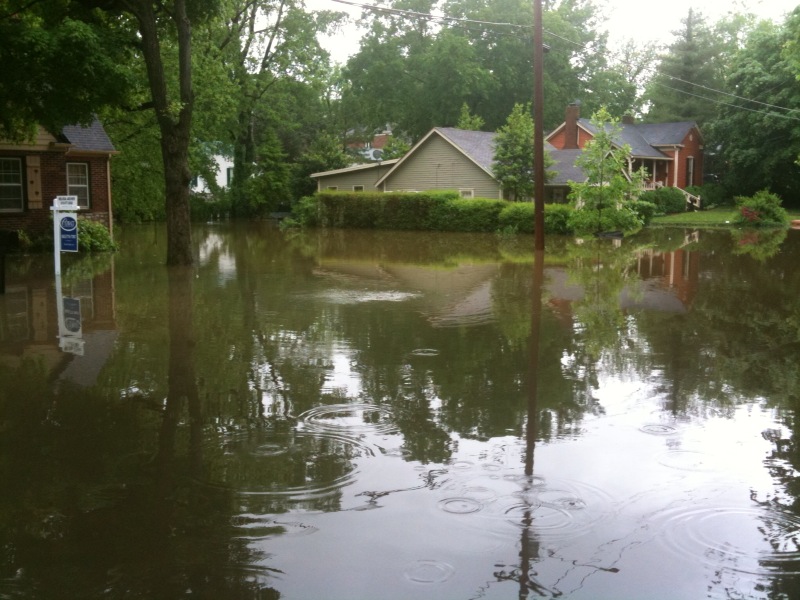
    As most of you know, Nashville and the surrounding areas were hit over the weekend with anywhere from eight to sixteen inches of rain. We had around fifteen inches in our backyard. Two of the main rivers that surround Nashville, the Cumberland and the Harpeth, went well beyond flood stages. Highways are closed, hundreds of roads and houses remain feet under water, and thousands of people have been impacted by this unexpected weather event.

    Flooding in Franklin TN

    There are many ways one can respond to crisis, and depending on the circumstance, sometimes what works best in one situation doesn’t work the best in another. I’ll share a bit from what I’ve learned from Red Cross disaster and aid training, and I’d love for you to share anything you’ve learned about helping out in the comment section.

    LOCAL DISASTERS:
    If a local disaster occurs (weather, fire, etc.) typically the first day is the day when city officials and emergency management organizations are assessing the issues. LET THEM. Trained professionals like the National Guard, local police, fire, and EMS and military are performing any rescues that need to happen.

    When this emergency response is happening effectively (proper communication is happening between officials and the media and public), it’s best to do whatever the officials tell you to do. You may want to jump in your car and dig through the rubble of a neighborhood that was hit by a tornado, but without the trained emergency responders there giving direction, you may cause more harm than good. Do you know if the gas lines have been turned off or if the buildings are stable enough to enter?

    Of course there will always be moments when we need to run into a situation even if a procedure hasn’t been set up, but these should be the exceptions. Bottom line? When good emergency management and communication is occurring, it’s best to follow their instructions.

    In the case of a local emergency, how can you help?

    (*Before attempting anything, always look at the situation and assess if it’s safe for you to enter!)

    Neighborhood:

    • Visit neighbors, especially elderly or sick, to see if they are safe or need anything.
    • Offer your home for the displaced in your community
    • Host a gathering with food for people nearby where it’s not a danger for people to venture out
    • Bring water or snacks to emergency responders and thank them
    • Watch for official statements, and communicate them to neighbors who may not have access to TV or the internet

    Community:

    • Follow instructions from emergency management on travel safety and how to volunteer. In the case of the Nashville flooding, if people volunteer outside of the official “Hands on Nashville” initiative, it will actually hurt Nashville, as assistance from FEMA is given through Hands on Nashville.
    • As long as emergency operations are running smoothly, don’t go rogue. Again, so many times in press conferences I kept hearing about how legitimate water rescuers had to rescue Good Samaritans who don’t know how to do water rescues, and the people who really needed help had to wait longer.
    • Follow official instructions. (Did I say that already?) There are reasons for this.
    • Call the local Red Cross or whatever organization is set up as the official responder. They will be able to guide you to volunteer in the most effective way because they are the ones who know not only the needs, but the priorities of the needs.
    • Find out what supplies you personally can donate in the long run to help (clothes, food, etc.).
    • Organize events in your community or church to collect supplies or donations.

    I highly encourage anyone who feels the pull to help when emergencies arise to sign up at your local Red Cross for disaster relief training, as well as first aid and CPR. These classes take time and cost a little money, but they will have you ready to assist when disaster strikes. Find a group of people at your office or your church to take classes with you. I promise you the skills you will learn will be invaluable.

  • What Happens When You Stuff A Jeep Full of Pancakes

    Yesterday, you found out about my trip to Moldova and Russia. So, as you’re reading this on Tuesday, I’m probably still traveling or getting settled somewhere. Knowing that I’d be away from the internet ahead of time, I asked my friend Josh Maisner to guest blog today.

    First, a little history lesson on Josh.

    In January, I was speaking at Belmont University. After my talk, I had an amazing conversation with a senior named Josh. He knew I was going to Haiti, and he was going to be going shortly after I was, so we talked a bit about it. In February, I returned from Haiti, and in March, Josh returned from Haiti. A week ago, over frozen yogurt, for two hours we talked about a million different things. Things like Haiti, and…well, things like pancakes.

    Josh told me about an experience he had one night here in Nashville last winter – the night before first semester finals. And I told him you guys had to hear it.

    So here’s Josh. And here’s a story about what happens when you stuff a jeep full of pancakes.

    —–

    Nashville had an uncharacteristically cold winter this year, and the night before finals was no exception.

    Every year at my university we take a break from studying on ‘Dead Day’ and head to the cafeteria and enjoy some golden pancakes; for free! You spend all day cramming and stressing over those first few finals, but there’s something about pancakes that just makes the world a little better.

    For a few moments, as that sweet, buttery piece of joy touches your lips; you can stop and forget about tomorrow’s problems.

    As the event wrapped up, I found myself one of the last people still there talking away, when something caught my eye.

    Bags and bags of hot pancakes were being taken out of the warmer and thrown away. Hundreds of pancakes were about to go to pancake heaven in a dumpster, and all I could think of was how many people were shivering in the cold on the streets of our city wishing they had a hot meal.

    Before I knew it, I was standing in front of the women throwing them away. You can imagine the look on her face as a 22 year old asks her to let him have ALL the pancakes! I told her I wanted to make some deliveries to those fighting the cold tonight on our streets…the homeless.

    Maybe some hot pancakes would afford them a momentary sweet escape from the cold.

    Due to the crunch time of finals nobody was around to help me hand out these pancakes, so I set off rogue, in my Jeep full of pancakes, to the streets of downtown Nashville.

    Within minutes I was out of my Jeep walking around to those huddled by bus stops, in doorways, and wandering the streets…bags of pancakes in hand. I’d give what I had in my hands away, hop back in the new “pancake mobile” and get on with my mission. If they were walking as I was driving, with windows rolled down and said yes when I asked if they were hungry, I was pulled over in a second and brought them some pancakes!

    That night as I listened to so many different stories I began to experience something incredible. Jesus says, “What you do unto the least of these, you do unto Me.”

    Looking into the eyes of each person as I gave them away I began to see with a new perspective. It was incredibly simple, but beautiful at the same time; as I handed out food to these strangers…

    I realized I was handing out pancakes to Jesus.

    On July 1, 2010,  I’m leaving the streets of Nashville with everything that I own held in a 50lb backpack to meet Jesus around the world. I will be a full time missionary on The World Race traveling to eleven different countries over eleven months working with impoverished children, human trafficking victims, and those who have been cast aside.

    My travels will take me back to Haiti, to once again work with those devastated by the earthquake, then on to The Dominican Republic, Romania, Turkey, Mozambique, Malawi, another country in Africa, China, Thailand, Cambodia, and the Philippines.

    It’s a life I never imagined for myself and only God could have planned; but then again, what do I know anyway?

    I invite you to follow my journey on my blog where you can read the stories and see the faces of those I meet who are need around the world.

    So, you can see why I think Josh is my new hero.

    What Josh doesn’t say that I will say is that for him to do this trip costs $15,000. That covers his travel and meals and all his expenses for the trip. Also what Josh doesn’t say is he needs to raise $11,885 to have his trip covered. And the dude leaves in a couple of months. From talking to Josh, it’s not like he hasn’t been trying to raise support. Trust me. He’s been working his freaking tail off both at work and doing fund raising.

    And you know what? He didn’t ask me to do this for him.

    But here’s my schtick.

    Because it’s my blog and I’m allowed to have a schtick.

    Help Josh raise they money he needs for this trip.

    You just gotta click here.

    I look at Josh and see a guy who is eight years (gasp) younger than I am.

    When I was 22, I was getting sober and trying to start my life over. I didn’t give a second thought to poverty…I just wanted to keep my sports car from getting repossessed.

    If this is Josh at 22…who will Josh be when he’s 30? What will eight years of growth do to an already open, adventurous, compassionate heart?

    Invest in him.

    We have.

    I can honestly say the return will be immeasurable.

  • Someone Who Goes Before You

    Now that the weather has been nice, I’ve been spending time outside on my bike preparing for the Ride:Well Tour. My first ride out was a few weeks ago. Last week, I went out with a friend (also a new rider) and mainly rode around some of the areas I had been running before. With one of us leading the way, it wasn’t so intimidating not knowing what was around the corner – say, if the shoulder disappeared or there was a dead squirrel.

    Monday, I went out by myself and took a road I had never ridden on before. It was a stretch of about 8 miles on Highway 96, and then you make a simple turn around at the Natchez Trace and ride back. I’ve driven this path before, and it looked like it had a decent bike lane (so the signs said) but when I was actually out on my bike, 75% of the time this “bike route” wasn’t even really paved (it had something on it, but it wasn’t asphalt) and was full of patches of slick gravel.

    Add to the mix an inexperienced cyclist, a 20 mph headwind on my first climb, and drivers of cars that do NOT comprehend the “cyclists get 3 feet of space” law and it ended up being a good ride to get under my belt for the sheer confidence-building element.

    People my age often share the complaint that we lack mentors. We didn’t have them growing up and we’re either afraid to ask someone to play that role (or are afraid because we don’t exactly know what a mentor does) or we move into a mentality that figuring it out on our own is more beneficial to our learning.

    Here’s the thing. I believe anyone of any age can be, and needs to be mentored. But while we’re trying to figure out what to do in our own lives, there is a generation of children who are growing up without fathers.

    These are the children who have potential that can either be turned good, or turned bad, depending on the type of relationships surrounding them. Who will they be influenced by? Who will go before them so they can navigate down the dangerous paths they’ll find along the way?

    It doesn’t seem like a pressing matter now because we see them as children. They don’t really “contribute to society,” so to speak. They go to school and play sports and eat and annoy us in movie theaters.

    We really need to shift our mindset and realize they may be children now, but in twenty years…thirty years…these children will be making decisions for our country.

    They will be making decisions about the law and our health care.

    They’ll be the ones engaging in negotiations with countries at war.

    They’ll be forming new companies and developing technologies.

    They’ll become parents themselves.

    There are 27 million children in America growing up without fathers. These children are more likely to commit crimes end up (repeatedly) in prison, statistically speaking. We don’t talk about this much in the church (I don’t know why…maybe it seems too unsolvable?) but it’s an issue the church should – and could take lead on.

    I have been supporting The Mentoring Project financially for about a year or so. There isn’t a way for me to be directly involved in the mentoring process yet as they operate currently with churches in the Portland area, but here in Nashville I can do something. I can financially help this organization continue to grow, and I can tell people about it.

    I’d like to share with you a couple of videos. The first is of Don Miller explaining a bit of his heart behind The Mentoring Project and why he started it, and the second one is just an incredible (and short) mini-documentary on what The Mentoring Project looks like in real life.

    Watch the videos. If you live in the Portland area, check into being a mentor. If you don’t, consider financially contributing. It’s amazing what $10 or $25 will do to push this amazing organization forward. And share. Please share these videos with the people around you and share what The Mentoring Project is doing.

    Fatherlessness is America is a crisis. But it’s one that we can put an end to. It’s a story that can be rewritten.

    Just to be clear, this is not a sponsored post in any way, shape, or form. I saw this documentary yesterday and wanted to share it with you.