I have a terrible habit of not finishing beverages. Size doesn’t matter. Whether it’s a 16 oz bottle of water or an 8 oz tiny can of Diet Coke, I don’t finish it.
Bottled water for some reason takes the brunt of my compulsion. It’s embarrassing to admit but there are times where I’ll just take a sip or two of a bottle of water and never touch it again.
Such was the case with the bottle of water in my car. It was the middle of August and on this particular day I grabbed a bottle of water on my way out to run errands. I took two sips and it stayed boiling in my car ever since.
On my way home from visiting a friend a few days later, I realized I was extremely thirsty. I hadn’t had a bit of water all day.
Diet Cherry Dr. Pepper? 
Yes.
Lots of sips.
Water?
No.
As I looked around my car, this forlorn bottle of water sat in my passenger seat. It was the only relief in sight and my forty-five minute drive stuck in bumper-to-bumper traffic began to feel like six hours as the sun began to burn my left arm.
“It’s not like it’s contaminated” I reassured myself. “It’s just really, really warm. That’s all. You can drink it. Come on.”
I unscrewed the blue cap, letting a bit of the air out of the bottle and took a gulp.
Warm and plasticky.
Delightful.
I began wondering how healthy this water could actually be if all I tasted was plastic. I thought about the segment on The Today Show where they compared the different numbers of the different plastics and I tried to remember which ones were toxic. Because I’m sure whatever it was I was drinking was not safe for consumption.
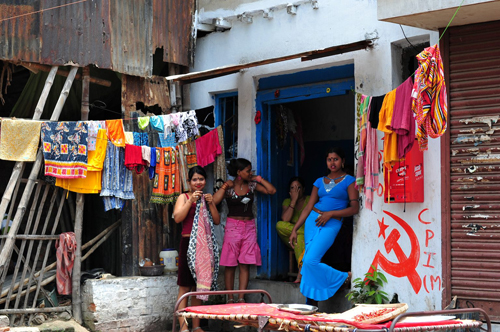
The heat of the water I was drinking, the droplets of sweat forming in the small of my back, and the sun being magnified by my untinted windows took me back to my trip to India earlier this year.
And this hot little bottle of water made me think of a little boy I met named Tushar.
***
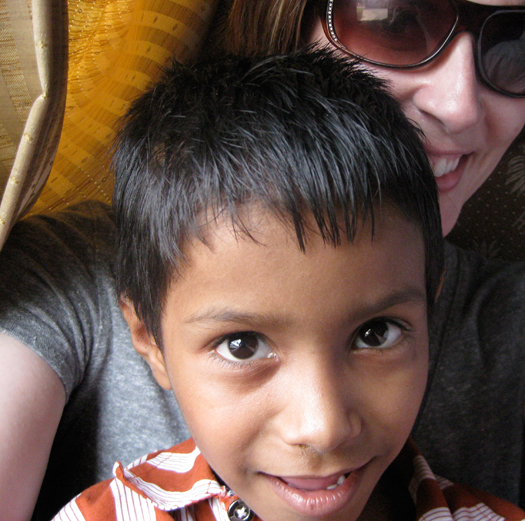
Tushar is a five year old who lives three hours outside of Kolkata. A few months ago, I began sponsoring him through an organization called Compassion International.
When I was in India, a few days before I left, I had the chance to meet Tushar and his father. They took a train from their village into the city. The translator introduced us and I realized Tushar’s dad was holding a bag and would occasionally take out a bottle of water for his son.
The bottle of water wasn’t like anything you or I would see, much less drink from, here in the States. There was no label. The outside was scratched.
Yet what was most surprising was what kind of water the bottle contained.
If I didn’t know better, I would think it was sun tea with lemon. It was a light brown, with little pieces of something floating in it.
But it was Tushar’s water. His drinking water. Water that was so precious, his father helped him ration it throughout their trip.
 After a visit to Science City, a museum that would be considered totally odd and possibly unsafe by Western standards, we went to a building that would be parallel to a Western mall. It had stores and a food court.
And it was lunch time.
Our host went to some of the restaurants to get us all something to drink. She came back with ice-cold bottled water.
Clean, never opened, cold bottled water.
Tushar’s dad reached across the table to open his bottle. Tushar leaned forward to take his first sip and when he grabbed the bottle for the first time, he immediately dropped it back on the table like it had bit him, almost spilling it. He pulled away and giggled.
I was a little confused but very much intrigued by his reaction. He wiped the condensation off his hand and reached forward for the bottle of water again. This time he didn’t grab it. He merely touched it with a couple of his fingers.
And Tushar giggled again.
Finally I realized something. He’s never touched anything cold before.
The area of India that he lives in rarely sees temperatures below 60 degrees.
The cold surprised him.
But in a good way.
Playfully, I poured cold water from my bottle into the tiny blue cap and splashed him with it.
He. Freaked. Out.
We continued our little water fight until his dad moved his bottle closer to him, as to say ,”This is for drinking and not for playing,” and Tushar sat up, knowing his dad was serious, and took a sip.
His eyes got wide as he felt the cold water slide down the back of his throat. When it reached his stomach, he grabbed his belly and grinned and giggled.
Drinking cold water was such a new experience for this little boy.
***
So, here I was, between Nashville and Franklin, Tennessee on I-65 contemplating the level of “poison” in my completely safe water and I wondered about Tushar and what he’s doing today. I wondered about his bottle of water. I doubt he was drinking anything nearly as clean or as available as I was. In fact, I doubt he had tasted water as cold or as clean since our time in the food court.
I held back the tears that so wanted to escape and travel down my face because of the unfairness of it all.
I wonder how many bottles of water I’ve carelessly and needlessly thrown away when a little boy and his family are grateful to have their dirty water in a bottle they found and probably share and hold dear.
For Pete’s sake. Even my dog has access to cleaner water than Tushar.
I can’t send Tushar clean water in the mail. I can’t take it to him or even make sure that he has access to it.
It’s a helpless feeling.
And it’s easy to ignore because it is so overwhelming.
What can I do? I can give Tushar a voice. I can speak for him by telling his story. You’re reading about him now. Maybe you’ll want to share his story too.
We may not be able to fix every problem we see, but we can allow the stories we hear to remind us of the incredible responsibility we have to share the needs of a broken world.
These stories can awaken us and inspire us to act: We can donate money to a water charity or go on a trip to build a well or to take some clean water to the homeless in our own cities and towns.
Now that you know, what will you do?