Category: Church

  • Why All The “Modesty Conversations” Miss The Point

    Last summer, the feeds in my various social media channels blew up with articles on modesty.

    How low is too low when it comes to necklines? One piece or two piece swimsuits (or, the generally-church-camp-approved tankini?) Spaghetti straps, tanks, or sleeveless? AND THE PLIGHT OF THE YOGA PANTS (oh, but it’s okay if your butt is covered!)

    And then articles followed on what Paul meant when he spoke of modesty (more of a financial context), how men (and women) are responsible for their thoughts and actions (pluck out your eye, sinner! it’s not my fault you can’t look at me without seeing me as an object!) and how culture plays into what we consider “modest” even means.

    The summer heat is upon us once again, as are all these conversations on modesty. In a mindless and brief skimming down my Facebook feed Sunday night, I’m fairly certain I saw more posts on modesty (and satirical ones at that) than I did the World Cup.

    (What has this country come to? Come on, y’all. It’s the World Cup!)

    The arguments were all the same, men and women pitted against the other team, one side crying “FREEDOM” and the other crying “RESPONSIBILITY!”

    …as if these two are mutually exclusive?

    This is not a post on whether or not your bikini will make Jesus mad or cause a man to lust after you. This is not a cultural dissection of contextual modesty. I’ve been to almost every continent and have seen completely covered and completely bare, depending on the culture. I understand how it works.

    This is a post on why most of the conversations I’ve read on modesty – regardless of the point someone is trying to make – are, in fact, well…missing the point.

    There is something more at stake than your clothing choices. 

    And that thing is community.

    It is another person, another flesh-on-spirit, imago dei.

    It is your family, your brother or sister given with a Holy being, intertwined with your own.

    ***

    BUT FREEDOM!

    Paul talks about freedom in Christ. A death on a cross gives us freedom to live. I hear cries of “I am not responsible if someone sins because of the way I am dressed!” And you are not. To a point. You do have freedom. And I think the greatest freedom is to choose to say no to your freedom for the sake of another person.

    We hear “Don’t dress to make a man like you. Don’t dress to make a woman like you. Dress to make you like you.”

    That, my friend, is not freedom.

    Let’s call it for what it is: entitlement. Many of us feel entitled to do what we want, to wear what we want, and to behave how we want to behave. Loving another is not about how we feel or even embracing our freedom.

    True freedom is laying down your life for another.

    There is no greater love than to lay down one’s life for one’s friends. (John 15:3)

    ***


    BUT REALLY, PEOPLE ARE RESPONSIBLE FOR THEIR OWN THOUGHTS! I COULD WEAR A MUMU AND BE A “STUMBLING BLOCK!”

    Yes. People are accountable for their own actions. You could wear a mumu and someone may undress that mumu right off you. I am not minimizing the responsibility we all have for our decisions to act against what we know is true and right and lovely.

    “Well, if I walked into a McDonald’s and ate 70 Big Macs, I’m responsible for that, not McDonald’s.”

    You’re right. But McDonald’s was not created in the image of God.

    You were. And so is your neighbor.

    We say someone else should take responsibility to not sin & we have freedom to do as we please. True. But let’s take this a step further. 

    Maybe we should take responsibility for another so they can have freedom instead of struggle.

    The truth is we are responsible for one another. We are not to judge or criticize people for thinking or acting differently than we do where there is freedom, but we are also to encourage others to be holy, not condemn them to it.

    There is not love in telling a man or woman to suck it up and deal with their lust problem so we can dress how we please.

    ***

    There is a picture here larger than the conversation of modesty. We are believers warring against each other under the name of freedom and waving the flags of entitlement. This idea can be copied and pasted over so many areas – alcohol, food, fill-in-the-blank.

    My fear is we get so wrapped up in our freedom that we can’t show love – true, sacrificial love – for each other.

    And when the world reads our passionate war words, they don’t see the love of Christ we are to love each other with, which is what our ultimate charge is.

    “Owe nothing to anyone—except for your obligation to love one another. If you love your neighbor, you will fulfill the requirements of God’s law” (Romans 13:8)

  • Surrender and Self-Sufficiency in the Church

    When I was nineteen years old, my grandfather was in his final hours of life after a long fight with cancer. He called each of his grandchildren into his room one at a time. I leaned over his fragile frame in order to hear the last words he would ever speak to me. He didn’t have the strength to open his eyes and could barely whisper the six words he spoke.

    “Never give up on church.”

    I told him I wouldn’t. But in order to keep my promise, I’d need to start making some significant changes in my life…like, actually going to church again. I had been out for a good three years, since my father left the ministry in a bloody battle of a business meeting.

    Over time and with conviction, I slowly let my walls down and tried to make good on my pledge to my grandfather. My actions stemmed more from wanting to keep my promise than actually being obedient to what God wanted, but eventually my change of behavior caused a change in my heart and I fell in love with the church in all of her magnificence and her flaws.

    I surrendered, slowly and timidly, to the call of unity God has placed on all His children. Surrender doesn’t come easily, especially when we’ve been hurt in the past. When we think about giving into something we used to push away from us, we’re met with an internal resistance. It’s easy to justify our actions that keep us walking the line between self-sufficiency and surrender.

    photo credit: Môsieur J. [version 9.1] via photopin cc

    As I’ve spent time talking to other Christians, and some who have even—in their own words—“left the faith,” or “left the church,” I’ve noticed a pattern so common it’s become perfectly acceptable without question. Someone enters into a relationship with a community of faith, and the programs or the legalism or the perceived lack of authenticity turns them away. It’s either too structured to have “organic” community (which is not a Biblical concept, by the way) or it’s so “organic” that relationships never grow because we don’t know how to grow them.  So we bail.

    I have a friend who’s an atheist but who stays in tune to what’s happening in different faiths. As he looked at the western Christian culture, it was easy for him to see the things that divide us. He bluntly asked me, “How can everyone in your faith be so divided yet claim to follow the same God?”

    Good question.

    I truly believe this break in our unity is a strategic plan of the enemy.

    Many Christians today have fallen into a culture that tells us we have the right to believe whatever we want to believe and are entitled to be right in our beliefs. And because of the surplus of platforms from which we can speak, never before our generation has a group of people been able to voice their beliefs so loud and clear.

    Some see this as progress. I see it as subtle (and at times, not so subtle) expressions of selfishness. Where in our proclamations and defenses of our personal beliefs do we find humility? Where do we find surrender?

    We don’t.

    In order to have healthy relationships with God and others, we must surrender. To God, we surrender our desire to live our lives for ourselves. Only by dying to ourselves—our human nature—can we truly live in the identity of who God created us to be. In order to embrace the person we are meant to be, we must let go of the person, the ego, we created.

    With others, we surrender our need to be right. We surrender our need to be heard. We trust in the paradox of finding peace in serving instead of demanding to be served and complaining about it when we aren’t.

    Surrender goes against our very nature to be independent. Surrender indicates we willingly choose to rely on others. We must rewire our thinking to recognize that needing another person (and being the person someone else needs) is not a weakness; it only strengthens us.

    ***

    (Most of this post was excerpted from my new book “Lean on Me: Finding Intentional, Vulnerable and Consistent Community.” It comes out this fall, but you can get a few free sample chapters here or preorder the book here.)


  • Mad Church Disease: Healing from Church Burnout is Updated, Expanded and Available with the Devotional Beating Burnout: A 30 Day Guide to Hope and Health

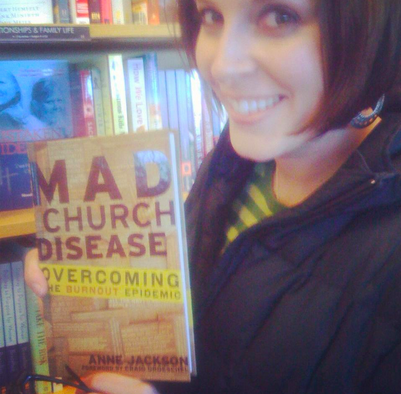
    Me with the very first copy of the original MCD in what used to be the Borders on West End in Nashville.
    Me with the very first copy of the original MCD in what used to be the Borders Books on West End in Nashville.

    In 2009, Mad Church Disease: Overcoming the Burnout Epidemic was published. Tens of thousands of people found hope and healing and the book was awarded Outreach Magazine’s “Vital Church Resource” Award. If you click on that link it takes you to the original book with the original reviews, so you can get an idea of what people thought of it.

    Then, unexpectedly in 2012, I providentially got all the rights back to the book. Considering there were only a few remaining in print, I knew it had to be updated & reprinted.

    In the mean time, Beating Burnout: A 30 Day Guide to Hope and Health was released as and became a featured devotional on YouVersion for a month or two, which was pretty neat.

    And now, Mad Church Disease: Healing from Church Burnout is back and ready to help you find healing in a revised and expanded fifth anniversary edition.

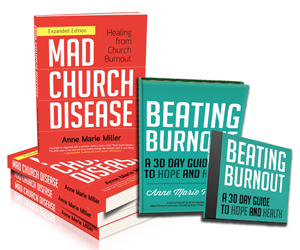
    Mad Church Disease BundleThe new, expanded edition of Mad Church Disease includes:

    • Over 40 pages of updated and new content
    • Five entirely new chapters
    • A focus on the first principle of healing from burnout: reconnecting with God
    • A new section on creating healthy environments
    • Extra study guide questions

    There are a few ways you can get your hands on these resources if you haven’t yet, or if you or your staff need a refresher. You can go the Amazon way:

    Mad Church Disease on Amazon.com (Kindle & Paperback)

    Beating Burnout on Amazon.com (Kindle & Paperback)
    Or, you can order them through me. With the Exclusive Team Bundle Special, you’ll get:
    • Get 2 Copies of Mad Church Disease
    • 2 Copies of Beating Burnout
    • PLUS the eBook of each book 
    • and the audio of Beating Burnout
    • Which is $75 value for only $45 + S/H
    Self-publishing is hard. Really hard. But when it’s all done, there’s no pressure to meet any sales quotas or get on any best-seller lists. I didn’t need to re-write Mad Church, but I wanted to because deep in my heart I know that there are people struggling with their calling, their workload, and burning out. So I hope this little project can help you (or someone you know) rest and heal.
    ***
  • Sex and Pornography Are Not the Enemies

    Sex and pornography are not the enemies, but we are in a fight.

    A quick timeline, for those of you who might be new here.

    1996: A youth pastor I trust sexually violates me. Also my first introduction to online pornography, which later becomes a compulsive behavior. (Compulsive sexual behaviors are not classified by the DSM as addictions – at best, they’re hypersexual disorders, which still doesn’t define what I would consider pornography addiction to be. Anyway, carry on.)

    2001: A friend opens up to me about her pornography habits, masturbation, and lust. Her choosing to “go first” gave me permission to share with her the shame I carried. Over the course of a couple years, we take a holistic approach to recovery.

    2006: I write an article on how girls can be addicted to pornography for Relevant

    2007: I speak for the very first time to a youth group and on a radio station in Dallas on how porn’s not just a guy’s problem.

    2008: God finds my fear of public speaking humorous as more and more speaking requests come in. I’m now visiting churches, colleges, and conferences with this story while working full time at a church.

    2009: My first book comes out and my speaking schedule is enough to keep the bills paid. I’m now a full-time self-employed author and speaker. This continues for the next five years.

    2013: After speaking at youth camps over the summer, I write a letter to parents about what they don’t know about their kids and sex based on the experience. By the end of the week, 1.5 million people read the darn thing. I am asked to speak even more about pornography and freedom.

    2014: I’ve had six speaking engagements on this topic and five of them I’ve been sick for. I’ve gone to the ER three times the week before these talks. That’s how sick I was. One I was so sick for I had to cancel and reschedule it. The first time, I chalked it up to bad luck. But now…in 83% of my speaking engagements only on this topic I’ve been tempted to cancel because of illness or injury?  I am starting to feel like there’s a target on my back. (It should be noted that I rarely get sick. The last time I got really sick was in 2010.)

    Photo Credit: CNN
    Photo Credit: CNN

    I don’t write this blog post from a state of fear (okay, maybe a little bit…!) But instead, it has only clarified to me the need for discussions to happen. I spoke at a high school night at a church in town last night. I was handed about 10 index cards with questions from the students after I was done speaking and one girl was insightful enough to say, Why are these conversations about lust generally directed toward guys when women struggle with it just as much?”

    Good, honest question. I responded with “Yes, girls are frequently left out of this conversation, but most churches don’t even touch this with their guys.” More churches are, and I’m thrilled. But most churches are not.

    Here is my challenge to you, my manifesto, the hill I will die on, and also what I instructed the girls to do last night.

    Make a ruckus. Make your leaders talk about this. 

    We are in a fight. We frequently point blame to the media and to pornography and to sex as the enemy. These things, especially sex, are NOT the enemy. Sex is a beautiful thing that we’ve been given to express love to our spouse. The media and pornography are simply tools the enemy uses to break us down, to addict us, to cause us to carry shame instead of strength and hopelessness instead of hope.

    Our enemy is Satan. Plain and simple.

    The reason I think we are in the heat of the fight is because I know I’m feeling the heat. And if I’m just one person out of many who are sharing this message that freedom and hope are both possible and necessary, I know there are others who are fighting to speak up, too.

    Here’s what you can do:

    1. Pray. Pray always. Pray for your family, your church leaders, and the people who are called and committed to sharing the message of God’s grace and hope to those broken by addictive behaviors and our children who are slammed with images and easy access.
    2. Know what your family’s doing. Have conversations that are uncomfortable. Set limits and boundaries on the internet and even how your child will respond to pressure when you’re not there. Have you made a plan with him or her when someone else brings over their phone at school that has an inappropriate image on it? Have that talk.
    3. Fight. Statistics tell me over half the people reading this are in a battle of their own. Please get help. Tell someone. Tell just one person. Do whatever is necessary, even if it’s extreme, to fight for freedom.
    4. Love your enemies. We can’t get angry at the media or the pornography industry. We also need to pray for the people trapped in there. Statistically, a lot of them don’t want to be there. Pray the love of God is so bright that darkness doesn’t exist anymore.
    5. Talk to your church leaders. Whoever is in charge of what is talked about at your church, ask them about this. Heck, relentlessly ask them about addressing this topic with adults, with students, and from a parenting point of view. Engage your church in a prayerful revival expectant on God to deliver those who are trapped and to use others who aren’t to heal. WE NEED EACH OTHER.
    6. Learn. I’ve created two resources pages for you with books I’ve read or trust enough to recommend. First, 20 Resources for Parents (you need to scroll down just a little) and I’m working on a new resource page with some nerdy brain books I love as well as some other books on pornography and women and talking to kids. You can get to that page here.

    Please join me in this fight. This is one where denomination doesn’t matter, socioeconomics don’t matter, your age doesn’t matter. We need to link arms as the body of Christ and fight the enemy from stealing so many precious and good things from us.

    We got this. And God’s got us.

  • We Saw Them Become Orphans

    It was our fourth time to Africa, but our first time to go as a pair.

    Tim was hired by The Alliance for Children Everywhere to write some scripts, shoot some video, and edit it for a curriculum churches and schools will use back in the states that will help raise awareness and funds for their work in Zambia.

    What does ACE do? Rescue children who would otherwise die. That’s what their website says, point-blank. They do a lot more than that, but that’s a pretty big first step.

    About a week before the trip, I learned we’d be staying in The House of Moses, the rescue center for babies who’ve been orphaned or abandoned. I knew instantly I would fight the duality between loving that we got to stay there (because who doesn’t like to play with a room full of babies and toddlers?) and the reality that I would want to do so much more than stay there and play. I’d battle that instinct most of us have to want to make everything right, even things that are well beyond our grasp.

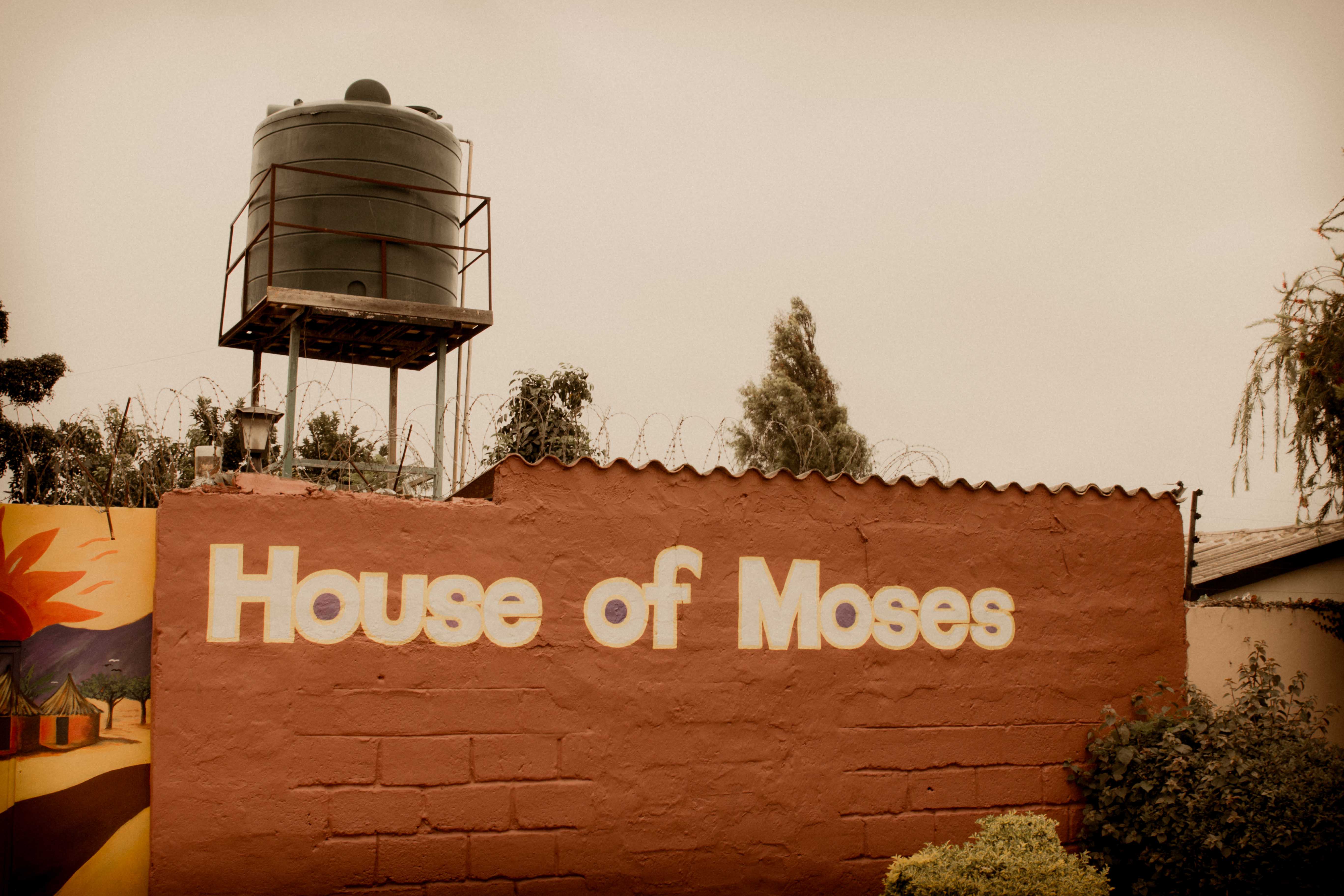
    House of Moses

    We were told it was likely we would see people dropping off abandoned babies. The house was small. We could be having dinner at the table (which is right next to the front door) and someone could come in with a baby that was found in a latrine. It wouldn’t be the first time that’s happened there.

    For the most part, our time there was pretty low-key. Some babies got dropped off, and one who was adopted went home. A mother who was in the process of adopting one of the children would come at dinner time most nights. It was clear these babies had hope and a future.

    Our last week, The House of Moses received 3 siblings. A toddler and newborn twins – a boy and a girl. The twins were only 3 weeks old and were only slightly larger than my hand. We learned their father died of HIV and their mother was in the hospital sick, likely because of HIV too. The twins stayed in the intake room, a quieter space with three cribs and 24/7 care.

    Once they were sure the twins were healthy, we were welcome to hold them any time we wanted. Now, I’m one of those people who have an irrational fear of dropping newborns, but after a day or two, I pushed through and picked up the little boy. His name? Gift.

    House of Moses

    Days went by and I found myself in the intake room with the twins more and more. If I was sitting in the front room reading and one started crying, I could look down at my watch and see it was time for them to be fed. Some kind of maternal instincts of mine were awakened. I was no longer afraid. I could comfort them if they cried or get a nurse if they needed milk…all while praying their mother survived.

    One morning, I went into the room and rubbed on their thin hands in just before we left. We returned from a full day of filming and we were told the mother passed away. In just a few short hours, these babies lost their mamma.

    I went in to the intake room fighting tears, and one of the caregivers was feeding the little girl.

    “The mother died,” she told me.

    I reached down to put my finger in Gift’s small hand. “I heard.”

    It was a raw and surreal moment, looking down at Gift and knowing he won’t remember his mother. I wondered what would happen to him, his twin sister, and their older sibling.  I started to cry.

    I moved down and knelt on the floor in front of the caregiver and gently rubbed the back of Gift’s sister’s leg. “How do you do it?” I asked the caregiver. “How do you work all the hours you work and see so many babies lose their parents. The parents die. Sometimes even the babies die. But you’re here and you have so much peace and hope in your eyes.

    Without hesitation and without a single tone of harshness or pride, she simply said, “Obedience and sacrifice. That is what God has told me to do and so I do it.”

    I literally couldn’t say anything back; my throat swelled and closed like I was allergic to the emotion that was filling it. Instinctually, the caregiver knew and said, “They will have a good family one day. It’s hard now, but God promises to take care of them.”

    I know she’s right and ultimately God will take care of them. But what do I do? What do we do? Where is our sacrifice and obedience?

    IMG_2567

    I’m tempted to think big acts equal big sacrifice, but I’m beginning to believe that – except for the one big sacrifice that was truly the greatest – the opposite is true. What if it’s the everyday things that are hidden that are the greatest sacrifices of all? Making sure people have love, food, and that they know Jesus.

    Maybe it’s as simple – and as unglamorous – as that.

    And even though may be unglamorous, it doesn’t mean it’s not beautiful.

    In fact, I’d dare to say the things we don’t see are the most beautiful things of all.


  • Beating Burnout Interview with Dr. Thom Rainer #5: Preventing Burnout

    I hope you’ve enjoyed this little video series with Dr. Thom Rainer, president of Lifeway. This is our fifth and final interview (and keep in mind, there was only supposed to be one video that emerged from our conference room chat…his insight is just so good and his heart is full of compassion, I’m so pleased we got five!)

    In this one, we discuss the root of burnout and how to prevent it spiritually, emotionally and physically.

    If you’ve missed any of the previous videos (which range from 3-6 minutes long), you can watch them:

    1) Beginnings of Burnout

    2) The Roles of Millennials and Mentoring in Stopping Burnout

    3) When Do You Quit?

    4) Symptoms of Burnout

    5) Preventing Burnout

    This is also the last week you can get Beating Burnout: A 30 Day Guide to Hope and Health on Amazon for 2.99 WITH a free audio book (after you email your receipt to me). You can also preorder the paperback over here! (If Amazon takes care of business, they’ll go out  next week!)

    ***

    http://www.youtube.com/watch?v=0BZW1cfzy94

    Praying you guys have a healthy weekend,

    Anne

  • Beating Burnout Interview with Dr. Thom Rainer #4: Burnout Symptoms

    In 2005, I found myself in a hospital totally burned out. At the time, I didn’t know it was burnout but after a week of (invasive, ahem) tests, they ruled out any disease. I was overweight, emotionally unstable, and isolated.

    Dr. Rainer and I talk about some burnout symptoms and how he almost got to a point of burning out himself.

    One of the most important questions I’ve ever been asked: “Does working in this church interfere with your communion with Christ” still influences me today.

    Check out today’s interview with Dr. Thom Rainer of LifeWay for Beating Burnout: A 30 Day Guide to Hope and Health (which is on sale at Amazon for just 2.99 through Friday or you can preorder the paperback here!)

    ***

    http://www.youtube.com/watch?v=aLgDZOXFjM4

  • Beating Burnout Interview with Dr. Thom Rainer #3: When Do You Quit?

    It’s a short one but a good one.

    How do you know if you’re supposed to leave serving at your particular church?

    How do you know if you should stay?

    How do you deal with the expectations others have on you?

    How do you keep an attitude of joy even when you’re faced with tough challenges?

    Check out today’s interview with Dr. Thom Rainer of LifeWay for Beating Burnout: A 30 Day Guide to Hope and Health (which is on sale at Amazon for just 2.99 through Friday or you can preorder the paperback here!)

    ***

    http://www.youtube.com/watch?v=S7FBJOjzNvU&feature=youtu.be

  • Beating Burnout Interview with Dr. Thom Rainer #2: Millennials and Mentoring

    How do you ask for mentoring or help when you’re burning out? Will the trends of programs and burnout continue happening in the church? What makes Dr. Thom Rainer “obnoxiously optimistic” about the church?

    Here’s part two of the interview I did with him.

    ***

    http://www.youtube.com/watch?v=O0tKTcWyJ34