Author: Anne Marie Miller

  • Inclement Weather and Church Closings

    I don’t get it.

    Maybe it is the fact I spent 23 of my almost 30 years of life in Texas (and most of that in West Texas, where we spent Christmas in shorts chasing the tumbleweeds outside. Hey, we were poor. That’s how we had fun. Okay?) but even after working in several churches over the last six years, I still do not understand why churches would have services during inclement weather.

    I’m not a very logical person. I really am not. But something logical inside me asks,

    “Why would you have people driving to church when there’s an 18 car pile up on the interstate because of the ice?”

    Why not provide resources for families or neighborhoods or community groups to “have church” without having to really travel in the weather? Use the internet to distribute material prepared ahead of time.

    Something.

    Anything.

    Since many of you work or serve in churches, and by reading my Twitter stream today I can see most churches are choosing to stay open regardless of how inclement the weather…may I be so bold to simply ask…

    Why?

    I really don’t understand and this is not a criticism at all…Please help me not feel like such a heathen for wanting to keep people off the roads when the weather outside is frightful.

  • Value vs. Usefulness

    Lately, I’ve been immersing myself in the words of Thomas Merton. If you’re not familiar with his writing, he’s a 20th century Trappist monk and writer (more here) and his words have the power to transcend the logical and explore the spiritual undercurrents in which we rarely dare to wade.

    I read this from Merton other day, and it reminded me of something I wrote in Mad Church Disease.

    “We are so obsessed with doing that we have no time and no imagination left for being. As a result, men are valued not for what they are but for what they do or what they have – for their usefulness”

    In Mad Church Disease, I confessed I was so busy “doing” things for God that I had forgotten how to simply “be.” with him.

    I love what Merton adds though – this second part:

    “As a result, men are valued not for what they are but for what they do or what they have – for their usefulness”

    Essentially, when we become wrapped up in our productivity, ambition, and success, we will inevitably cast the same expectations on others. We will focus on what they do instead of the beautiful layers of who they are, removing us further from God’s design to exist in a non-judgmental, merciful community where we consider others better than ourselves…

    I know I constantly am driven by my ambition and the results of it. And as a culture, upon meeting someone new, we typically ask, “So…what do you do?” While that’s an innocent question in and of itself, I think it’s an indicator of the priorities we’ve subtly placed on what it means to be a valuable human being.

    What do you think? Have you experienced this in your life?


  • My Blog is Now Officially a Mom Blog

    No, we’re not pregnant.

    But my mom is posting on my blog today about her thoughts on my trip to Haiti in two weeks.

    If you recall when I announced I was going, I said

    “I am positive the moment my mother reads this post she will be calling me and likely ordering me to stay home.”

    I said that because she cried when I went to Africa.

    She cried when I went to India.

    She’s my mom – and most moms aren’t thrilled when their children are put in dangerous situations.

    So, without further adieu, I’d like for you to meet my mom, and hear her thoughts about me going to Haiti.

    —–

    Haiti.

    Just thinking about all the death and destruction sends chills up my spine.

    Such devastating earthquakes.

    Massive graves of people.

    Truck loads of bodies being dumped.

    These thoughts went through my mind after all the news stories and personal accounts of what was transpiring there. It was beyond comprehension.

    Then came that night.

    I read all of Anne’s blogs. My day would not be complete if I didn’t check up on her. Call it…a mom’s prerogative. I try to check up on her Twitter, too, even though I don’t Twitter. I don’t blog either. No Facebook. Nothing.

    But I know what my daughter’s doing.

    Thanks, Internet.

    I know she has a heart for people in need.

    It first started with caring for animals when she was younger. Then she started doing peer counseling in the sixth grade. And in high school, she never missed a chance to serve, whether it was at our church or out with her youth group. Now, over the last few years, her trips with Compassion to Uganda and India show that she still puts feet to her words.

    “Be ye doers of the Word and not hearers only.”

    It didn’t really surprise me when she announced she was going to Haiti. In fact, when I told her father and her brother, they both said the same thing.

    “Of course she is.”

    Concerns?

    Yes.

    I have lots of them. I was concerned when she went to Uganda and India, too.

    Prayers?

    They’re always going up. It’s part of my life.

    But what kind of parent would I be if I tried to limit her or place geographical boundaries on where her feet should go, and where her stories (which will shine the hope of Christ) will come from?

    If I did that, I would be saying God can’t take care of her and He can’t hold her in the palm of His hand.

    But…I’m still her mother.

    And I will still worry about her.

    But I know who holds tomorrow because I know who holds her hand, whether she’s in Nashville with friends, or Texas with me, or Haiti with the wounded, and dying, and desperate.

    Feel free to leave comments for my mom. I know she’ll be reading them, and she’ll cherish them as well as any prayers you may have to share too. I’ll even see if she’ll be open to responding. I’m sure she will as her schedule allows.

  • Guest Post by Seth Godin: Why is it So Difficult to Be Human?

    Today, these words are given by the ever generous Seth Godin.

    His guest post is titled “Why is it So Difficult to Be Human?” and it was written just for you. I think he shares a very profound question that many of us have asked on this blog before.

    He also contributed on many other blogs today, of which you can find a list here.

    ——-

    Why is it so difficult to be human?

    What does it mean to be human anyway?

    A key part of being a real person – a human being – is showing up, especially when it?s difficult, particularly when it?s frightening to do so.

    Showing up counts for a lot. Why? Because it’s scarce.

    Someone who will comfort you on the phone in the middle of the night, then throw on a bathrobe and drive to your house. That’s precious.

    Someone who tells you the truth.

    Someone who exposes herself, is present, connected and willing to let you hurt them.

    These are the things we seek out as people, and yet we rarely find them. And yet we are rarely willing to be this person.

    We built institutions, organizations and religions to make it easy to avoid being this person. The rules and principles and jobs and buildings and code words and admonitions… they all exist to protect us from the truths we’re afraid of and from the interactions we’d rather not have.

    They organize us, and organization is a wonderful way to be protected.

    We go to work and we hide. We hide behind the religion of our brand or our team or our Dunder-Mifflin employee manual. We go to a foreign country and we play tourist, because actually going there is too difficult, too risky, to exposed.

    Showing up counts for a lot.

    When we show up, we connect, we make change, we are transparent, and yes, we’re human.

    Caring hurts sometimes, and that’s inconvenient.

    The good news is that more than ever, value accrues to those that show up, those that make a difference, those that do work that matters.

    The good news is that digging deep and fighting that voice that begs us to shut up instead of show up really pays off now, in more ways than we can count.

    Faith in yourself, in your friends, in your colleagues and most of all, faith in your ability to impact our future is the best strategy I know.

    —-

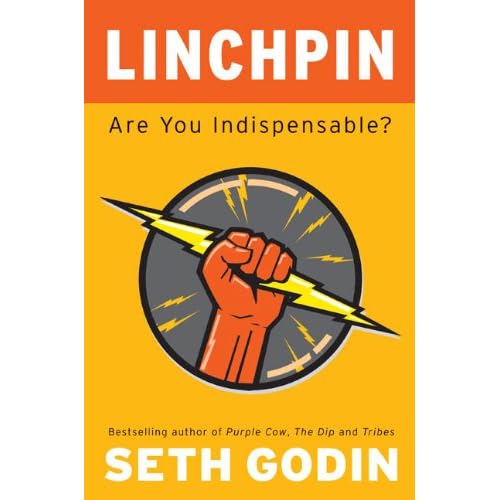
    Seth Godin’s new book LINCHPIN comes out today. It’s about art and gifts and connection and making a difference. And you should really read it because it’s really great.

    And also, you should get a few of his other books if you haven’t yet. Three of my favorites are Purple Cow, The Dip, and Tribes. All three of those have shaped my perspective and execution of how and why and when I do what I do. You won’t be disappointed!

    Disclosure of Material Connection: This is a ?sponsored post.? The company or identity who sponsored it compensated me via a cash payment, gift, or something else of value to write it. Regardless, I only recommend products or services I use personally and believe will be good for my readers. I am disclosing this in accordance with the Federal Trade Commission?s 16 CFR, Part 255: ?Guides Concerning the Use of Endorsements and Testimonials in Advertising.?


  • The Power of Words

    For most of my life, I’ve been an extremely sensitive person. I also had a terribly awkward last name growing up, so it was easy to make fun of the goofy girl with big teeth and big eyes and a funny last name.

    I spent a lot of my elementary school days crying alone in my room, brooding on whatever harsh words were spoken to me by my classmates.

    In high school, I grew out of the big teeth (I actually quite like my teeth now), and found myself in academics and sports. I was in the National Honor Society, was identified by the Duke University talented program in the seventh grade, aced my honors classes, and excelled at basketball. Our family settled into Abilene for a few years while I was in high school and I made good friends that I still adore today. I didn’t get made fun of much then, or as I blossomed into an adult and into a couple of different careers.

    My mom always prayed that I would have a sensitive heart, and now as I share it in a world where thousands can read and voice their own opinion, my skin has become soft again.

    Words move me in dramatic ways – both positive, and negative.

    The prayers and words of kindness from strangers elate me, and show me the voice of God through humanity. In more recent weeks, the critics have shown up on several posts, voicing their opinions as well.

    I am fully supportive of everyone having the right to their own thought, and the right to voicing their own thought. I don’t ever expect everyone to agree with everything I say or do, and that’s completely fine. I’ll never delete a comment that shares a different point of view, even if it’s said in an argumentative tone.

    However, I do ask you this. If you read my blog, or any others, or hear a story or meet a person and something inside you compels you to share your opinion, please consider the words you use to communicate.

    It is of utmost importance that even if we take a opposing stance on an issue, we shouldn’t debate the other person’s heart, integrity, or motivation.

    We are not, and can not be, the judge of that.

    The power our words have can be extremely positive and uplifting, and can even push someone to grow if we communicate a different opinion in a positive manner.

    Our words can also be like poison, and shrink and twist the heart and life and faith of the person with whom we disagree.

    Yes, I’m a very sensitive person and there are steps on my journey that I need to take to toughen my skin and not take harsh statements so personally and deeply.

    I also know I’m not the only person in the world that feels the power of words deeply.

    Speak gently.

    Speak carefully.

    Speak thoughtfully.

    Speak graciously.

    Speak humbly.

    We can do these things, and still disagree with someone.

    In fact, I think that may be the only way we can properly disagree with someone.

  • I’m Going to Haiti

    EDIT:

    Because of some of the questions raised in the comments, I thought I’d clarify a few things.

    I am going with a respected organization that has been on the ground in many countries, including on the island of Hispaniola prior to the earthquake, for many years.

    This organization has a track record of responding holistically to crises like this.

    There is a strategy and there are specific things we will be doing that are needed, otherwise we would not have been invited.

    There is intention behind each person who is going on this trip at the time we are going.

    I will share more details next week as we finalize the trip.

    Thanks.

    ———

    A couple of days ago, I was driving somewhere and thinking about Haiti.

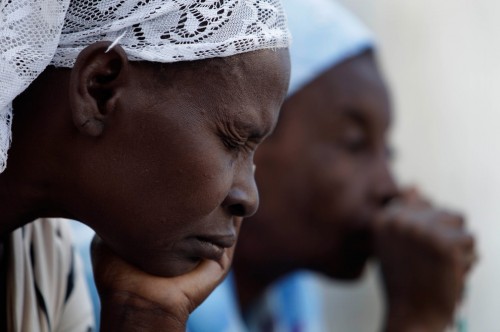
    It may have been around the same time they released the “estimated 200,000 dead” statistic because I remember thinking how impossible it would be to imagine what 200,000 dead actually looks like in person. And my mind just couldn’t go there.

    One reason is because I’ve never quite seen a real dead body before. I did see my aunt in her casket at her funeral but that doesn’t really count. Every other funeral I’ve attended has been closed-casket or the body had been cremated.

    I saw a picture of a mass grave in Haiti (it’s graphic but it’s here if you choose to click it) that gave me a taste of what 50 bodies looked like. I sat and stared at it for a good five minutes with tears rolling down my face.

    And as I was staring at this picture I simply felt the nudge:

    Go.

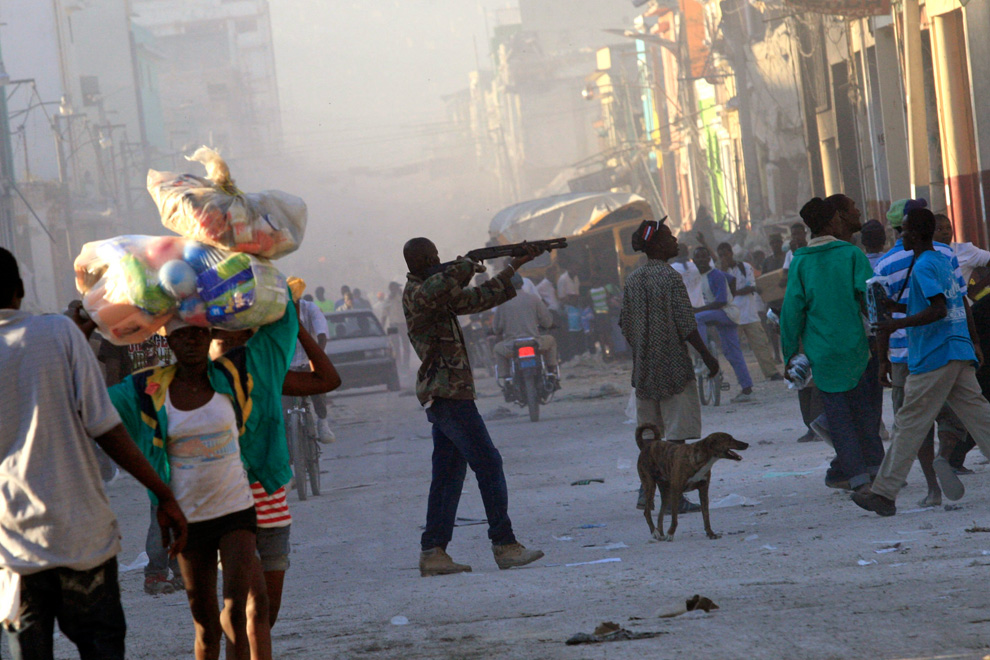
    I laughed a little bit because surely God knows that February is really busy and I have to raise $5000 for my Ride:Well trip and he knows I’ve never slept anywhere but my bed or a bed in a hotel room and my sense of smell is really overactive so there’s no way I could possibly handle what Haiti must smell like, and oh yeah, did you see all the pictures of random people with guns?

    That’s funny. Real funny.

    Go.

    Maybe God meant “go to Starbucks to get a skinny latte.”

    A couple of hours later, I got an email from a friend of mine who asked me if I’d like to go to Haiti with his organization in a few weeks.

    Without hesitation, I responded “100% yes.”

    And so I’m going to Haiti.

    I tweeted this yesterday, and it’s been interesting to see the variety of responses. Some people say they’re flat out jealous. They want to go to Haiti and please hear me when I say I understand your heart and your desire to help in such a desperate time. I really, really do.

    But jealous?

    Frankly, I have to say I would side with the other group of people that are saying, “I”m so glad it’s you going and not me.”

    A week and a half ago I had no idea I’d be spending the last week of my 20’s (I turn 30 on February 19) in a country that wasn’t exactly safe to visit before the earthquake. And now I know I’m supposed to go and help and share with you what is happening and how, long term, Haiti is going to need our help.

    Here’s the thing I want to leave you with:

    I tend to believe that when fear, or comfort, or some other little obstacle pops in our head the correct response is to do the exact opposite.

    Fear says, “Haiti is dangerous. You have to take those malaria pills that make your stomach hurt and what if there’s another earthquake while you’re there? What if you get shot at? ”

    Comfort says, “You won’t have your choice of firm or soft pillows and it very well will smell like the rotting stench of death. You might be sleeping in a tent on the ground.”

    Some people have said going to Haiti right now is like entering into a war zone. A war zone without any knowledge about what may or may not happen from one moment to the next. I am positive the moment my mother reads this post she will be calling me and likely ordering me to stay home.

    I love you mom, but I’m sorry. I have to go.

    You know what? I don’t have to go. I could email my friend and pull out right now.

    A phrase my friend Jamie likes to use is “I get to.”

    I get to go.

    I don’t know what’s going to happen on this trip. I have no idea what to expect and I even asked the trip organizers to leave out most of the details except the things I simply need to know. Don’t tell me how we’re driving to Haiti or where we’ll sleep or what we’ll eat.

    I don’t think I can fully process that yet.

    I get to go. And I’m sticking with that.

    The people of Haiti didn’t plan to have their lives interrupted (or ended) a week ago.

    This is a whole new part of their story.

    As I spoke to my friend a couple of days ago when we were working on some of the details, we realized Haiti is never going to be restored.

    Haiti is going to be reborn.

    We all get to be a part of that story – whether it’s by donating money or supplies or by taking a couple of Valium and getting on a plane.

    I’m grateful that it’s not only Haiti’s story, and it’s not only yours and mine, either.

    I’m grateful there’s a sovereign God who has a plan and purpose beyond anything we can imagine. And I’m grateful his breath is woven through each and every letter of each and every word of this new story as it is being written.

    (To make sure you get my updates from Haiti, you can subscribe to my blog via RSS, get updates by email, or follow me on Twitter.)

  • Forgiveness and Reconciliation

    I never thought there was much difference between reconciliation and forgiveness. In my heart, it all kind of meant the same thing – letting go of pain that someone had inflicted on me. Usually this involved some type of “making up” process involving apologies, sometimes tears, and a hug to make everything alright.

    Twelve years ago, somebody hurt me in a very painful, inexcusable way. For years, I didn’t allow myself to work through the pain as I needed to. A couple of years ago, circumstances (which were mostly out of my control) caused me to stare at this wound square in the face.

    As strange as it sounds, I’ve never doubted that I forgave this person. I feel fortunate that, for the most part, forgiveness comes easy to me. There are probably only two situations in my life where I know I still need to work on forgiving someone, but this particular hurt isn’t one of them.

    However, as I was processing through healing during this time, I began questioning if i really had forgiven this person. Sure, the scabs had been peeled off and the wounds were fresh – and it hurt…badly, all over again.

    Someone who was helping me through this sent me an email. He encouraged me and said that what I was experiencing wasn’t me being bitter or holding on (which was what I was afraid I was doing) but that I was desiring reconciliation.

    I wanted for this person to own up to the mistake and for everything – painful as it would be – to be okay again.

    And I wanted for the relationship to be harmonized and restored completely.

    Later, I read this in a book:

    Joseph was reconciled with his brothers when they came to Egypt in search of grain. By the time his brothers reached Egypt, he was able to stand before them and confront them because he had no inner feelings that would keep him from having a relationship of unity and peace with them.

    Forgiveness is unilateral. You can forgive even if [someone] never admits [their wrong doing], is never sorry, and never changes. But reconciliation requires both people’s commitment to recovery, honesty, repentance, forgiveness, and communication. Even then, reconciliation is a long and difficult process of breaking down barriers and building trust.

    You may not ever be reconciled with a person that hurt you (or that you hurt).

    That part takes both people to work through.

    Forgiveness is a necessary, but not a sufficient condition for reconciliation.

    However, forgiveness is a decision that you make, and continue to make, regardless of the other person’s choice.

    And through the cross and grace and love, you can.

  • Who Had the Greatest Influence on You?

    1996 and 1997 were really difficult years for me.

    A few months into my junior year (which was 1996), my mom got a teaching job in Dallas and we moved three hours away from Abilene, where we had lived for almost four years. I was the new kid at a new school for the sixth time in sixteen years. I hated it. I wanted to move back so I could be with my friends (and my first real romance…a senior named Nathan who made amazing Cherry Cokes at the IHOP where he worked).

    When I enrolled, I learned that since I had been on the honors track my first two years in high school, I could actually graduate early – I would just have to take two English courses to get the four required English credits. That meant I could graduate as a junior.

    As I entered into my last semester of high school in the Spring of 1997, I was in and out of an abusive relationship, was still lonely from moving, and had nowhere to turn.

    It was also that semester when my senior English class had a student teacher from a local university. His project for us was to keep a journal every day for that semester.

    My journal entries started out more like a diary:

    “Went to school. Skipped third and fourth period. Went to work. Did homework. Went to bed.”

    “It’s my brother’s birthday. I forgot.”

    However, we didn’t just keep the journal in class. We read literature and we studied grammar and we wrote an endless amount of book reports. And I don’t remember the context, but at some point mid-semester, the student teacher said something in class that I’ll never forget.

    “When you feel something, no matter how good or bad it is, feel it as deeply as you can. And remember it. Write it down.”

    After he said that, something magical happened.

    I started writing poems.

    Abstract, moody, emotive poems.

    And those poems — they set me free.

    They helped me process my emotions.

    They helped me heal.

    They probably saved me.

    After I graduated, I didn’t stop. I kept writing. I have journals full of poems and prose that carried me through so many seasons – good and bad. Some of the poems you can find here.

    And I still write. I feel something deeply and I write about it.

    Not because I have to…but because somewhere along the way, I fell in love with words.

    Words have become my life.

    And it all goes back to the words from this teacher.

    In a month or so, I may get a chance to see him after thirteen years. I’m speaking about an hour away from where he teaches.

    And it would mean the world to me to tell him how grateful I am for the way he taught us.

    I really think if he wouldn’t have assigned us that journal project, and if he wouldn’t have said that thing about feeling deeply, I would probably be an engineer or a police officer or in retail or business.

    All of which are respectable careers, but in the end, they weren’t for me.

    This blog wouldn’t exist.

    My books wouldn’t exist.

    My heart – in the way that it feels things so deeply (maybe too deeply at times…but that’s okay with me) – wouldn’t exist.

    This teacher had a tremendous influence on me, although it’s taken thirteen years to fully realize it, now that I do, I just want to tell him…

    THANK YOU.

    So I’m curious.

    Who was this person for you? Who left a mark on your heart that is so defining, it’s part of who you are today?

  • Circumstantial Relationships

    A couple of weeks ago, I asked where people felt most alone in their lives. Was it in their finances? Marriage? Singlehood (or is it singleness?) Church? Work?

    One of the recurring themes was this notion of relationships that appear rich for a certain amount of time, but when a given circumstance changes (like somebody moves or changes their place of employment or leaves a church), the people in those once close relationships seem to fall off the face of the earth.

    My dad was the pastor of four churches, and I remember him grieving relationships that would disappear. He would try and keep in touch with old friends but because we had moved, the relationships were more difficult to invest in. I’ve also been on staff at a handful of churches – one for several years – and some of the relationships I had that I thought would be lifelong changed the moment my zip code did.

    Even now, as we’ve lived in the Nashville area for about a year and a half, we’ve moved from Nashville to Franklin, and I have gone from working full time on a church staff to writing and speaking full time, which has me traveling at least thirty weekends a year so I’m rarely actually attending the church I was on staff at. It’s been interesting to see how some of my relationships have changed when the circumstances changed.

    In most cases, it seems like when our relationships are these “circumstantial” relationships, we tend to feel abandoned to some extent when they’re gone. Sometimes we reach out and aren’t met, and sometimes nobody moves and the relationship simply fizzles out.

    And maybe those relationships weren’t meant to be a seasoned friendship.

    And maybe that’s okay.

    All this thinking on circumstantial relationships has me wondering if sometimes, we aren’t intentional enough in keeping up with people with whom we were once close. I know I’ve been guilty of investing in a relationship because I knew it was mutually beneficial to some degree, and when that changed, I pulled away. And I know that I’ve been in relationships with people who have done the same.

    I’m just as guilty as using as I am of being used. Perhaps we all are.

    What role do circumstantial relationships have in our lives? If most of us seem hurt when these relationships end, maybe they were meant to go deeper than we’ve allowed them to. Are we too busy for nurturing and cultivating relationships outside of our everyday environments?